

Views: 0 Author: Site Editor Publish Time: 2025-11-11 Origin: Site


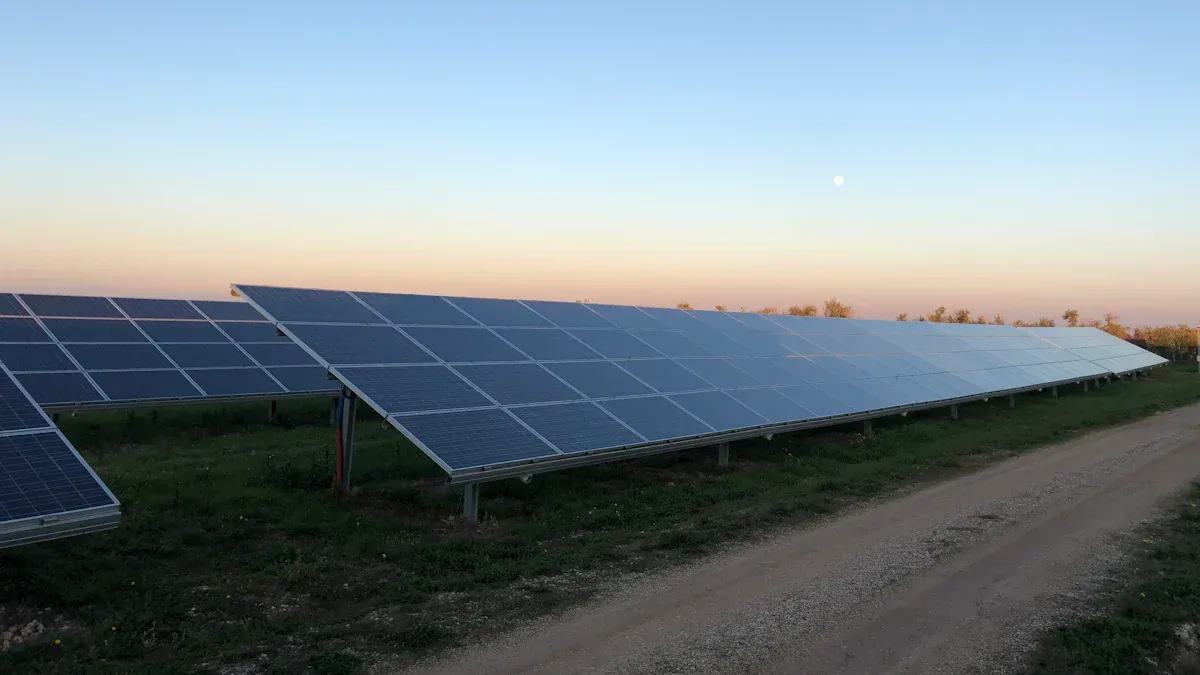
Thinking about solar panels for your property? Ground-mounted systems give you more freedom with placement and let you aim for perfect sunshine. You don’t have to worry about roof size, so you can install more panels and boost your energy production. Take a look at how ground-mounted panels compare to roof-mounted systems worldwide:
System Type | Installation Capacity (GW) | Percentage of Installations |
|---|---|---|
Roof-mounted | 24% | |
Ground-mounted | 160 | 67% |
Here are the most common pros and cons:
Pros:
No roof space restrictions
Perfect sunshine alignment
Cons:
Higher upfront cost
Can affect your property’s look
If you want to know if the Pros and Cons of Ground Mount Solar Panels fit your needs, think about your budget, available space, and long-term plans. Reach out to Haina Solar for expert advice.
Ground-mounted solar panels can face the sun better. This helps them make more energy than roof-mounted systems.
You can put these systems in many places. This lets you pick the spot with the most sunlight.
Ground-mounted panels are simple to take care of. You do not need to climb on a roof to reach them. This saves you time and work.
Ground-mounted systems cost more at first. But they can save you more money over time because they work better.
Think about space before you install them. Ground-mounted systems need about 640 square feet for a normal home.
How your property looks may change. Ground-mounted panels can make your yard look different.
Getting permits for ground-mounted systems can be hard. You may need more forms and approvals than for roof-mounted ones.
Talking to solar experts like Haina Solar can help. They can guide you through problems and help you get the best solar setup.
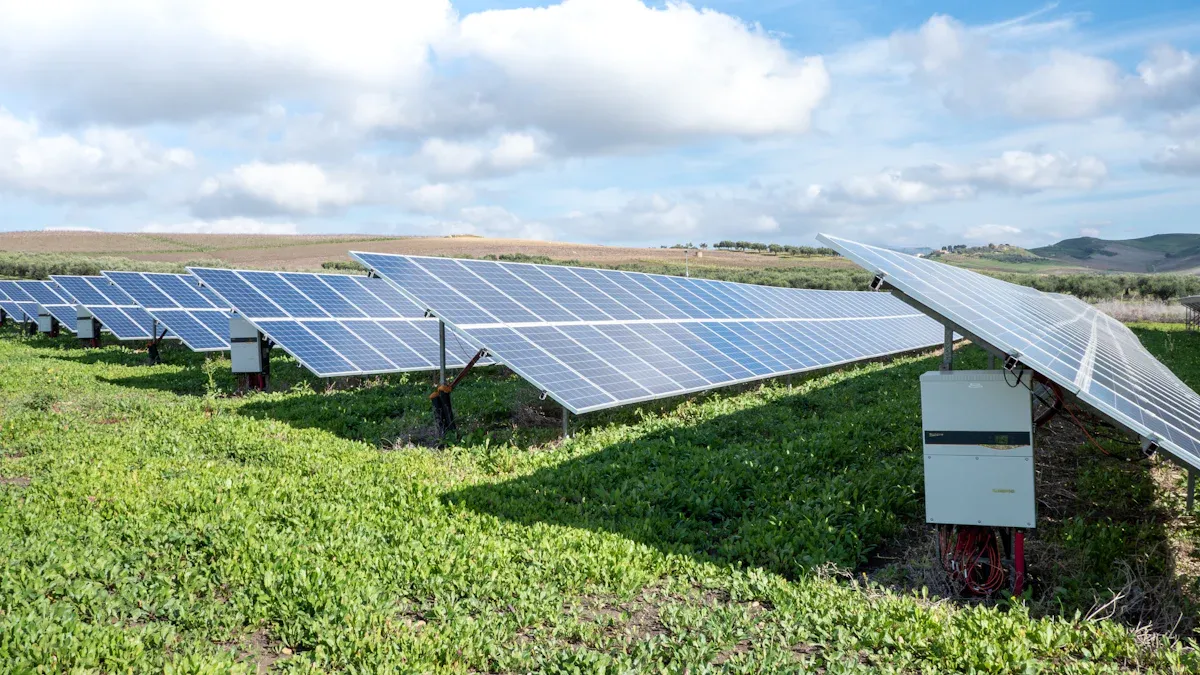
You might wonder what ground-mounted solar panels are and how they work. These panels sit on a special frame or rack that you place directly on the ground. You don’t need a roof for support. Instead, you use steel beams and concrete bases to hold the panels steady. This setup lets you pick the best spot on your property for sunlight. You can adjust the height, so the panels stand just a few inches or several feet above the ground.
Here’s a quick look at how ground-mounted solar panels compare to rooftop solar panels:
Aspect | Ground-Mounted Solar Panels | Rooftop Solar Panels |
|---|---|---|
Installation Structure | Requires a separate support structure, often made of steel beams and concrete bases. | Utilizes the existing roof structure for support. |
Height | Can vary from a few inches to several feet above ground. | Typically flush with the roof surface. |
Maintenance | Easier access for maintenance and repairs. | More challenging due to height and roof access. |
Efficiency | Can be optimized for sunlight exposure with tracking systems. | Limited by roof orientation and shading. |
Tip: You get easier access for cleaning and repairs with ground-mounted solar panels. You don’t have to climb up on your roof.
You have a few choices when it comes to ground-mounted solar systems. Each type has its own design and benefits. Let’s break them down:
Standard mounts use a fixed frame that holds the panels in one position. You set them up in a sunny spot, and they stay put. These mounts need more space, but they cost less to install. If you want a simple and budget-friendly option, standard mounts might work for you.
Type of System | Description | Key Benefits |
|---|---|---|
Standard Ground Mounts | Fixed installations that require more space but are cost-effective. | Lower material and labor costs. |
Pole mounts lift the panels off the ground using sturdy poles. You can adjust the angle and height to catch more sunlight. This design saves space and gives you better sun exposure. Pole mounts work well if you want flexibility and don’t have a lot of open land.
Type of System | Description | Key Benefits |
|---|---|---|
Pole Mounts | Mounted on poles, offering flexibility in orientation and height. | Better sun exposure, space-saving design. |
Tracking mounts use motors to follow the sun across the sky. The panels move during the day to soak up as much sunlight as possible. You can get up to 40% more energy compared to fixed systems. Tracking mounts cost more, but they boost your energy production.
Type of System | Description | Key Benefits |
|---|---|---|
Tracking Systems | Follow the sun’s path to maximize energy production. | Up to 40% more energy yield compared to fixed. |
Note: If you want the highest efficiency, tracking mounts give you the best results, but they need more investment.
Ground-mounted solar panels give you options for placement, design, and energy output. You can choose the system that fits your property and goals. Whether you want something simple or high-tech, ground-mounted solar systems offer flexibility and easy maintenance.
When you look at the pros and cons of ground mount solar panels, you see a lot of factors that can help you decide if this system fits your needs. Let’s break down the advantages and disadvantages so you can make a smart choice for your property.
You get the best sun exposure with ground-mounted solar panels. You can set up your solar ground mount at the perfect angle and direction. This means you capture more sunlight and boost your energy production capacity. Unlike rooftop systems, you don’t have to worry about roof shape or shade from trees. Take a look at how these systems help you get the most out of the sun:
Advantage | Explanation |
|---|---|
Adjustable Tilt Mechanism | You can change the angle of your panels to match the sun’s position all year. |
Improved Airflow Design | Panels stay cooler, which helps them work better and last longer. |
Optimal Orientation | You pick the best spot for sunlight, not limited by your roof’s direction or obstacles. |
Ground-mounted solar panels give you freedom. You can place your ground-mounted solar array anywhere on your property. If you have a big backyard or open land, you can set up your solar ground mount in a spot with no shade. This flexibility lets you avoid obstacles and get higher energy efficiency.
Benefit | Description |
|---|---|
Higher Energy Efficiency | You can set up panels at the best angle for sunlight, unlike roof systems. |
Optimal Positioning | You adjust placement to get the most solar energy. |
Easier Maintenance | You reach panels easily for cleaning and repairs. |
You can set up your ground-mounted solar panels facing south in a sunny area.
You get more energy because you avoid shade and use the best tilt angles.
You get more power from ground-mounted solar panels. These systems let you use tracking mounts that follow the sun. You can increase your energy output by up to 40% compared to fixed rooftop panels. The design also helps panels stay cool, which means they work better and last longer.
Ground-mounted solar panels are easy to install and maintain. You don’t need to climb on your roof. You can walk right up to your solar ground mount for cleaning or repairs. This makes your job easier and keeps your system running smoothly.
Tip: You save time and effort with ground-mounted solar panels because you can reach them without special equipment.
You get strong support with ground-mounted solar panels. Engineers design these systems to handle high winds and extreme weather. The foundations use steel posts or concrete, so your solar ground mount stays stable even during storms. This means you don’t have to worry about panels blowing away or getting damaged.
If you want to add more panels later, ground-mounted solar panels make it easy. You can expand your ground-mounted solar array as your energy needs grow. This is great for families or businesses that want to start small and build up over time. Solar ground mount systems work well for big projects, like solar farms, because you can change the design and add more panels whenever you need.
One of the main disadvantages of ground-mounted solar is the price. You pay more upfront for a ground-mounted solar array than for rooftop panels. The extra cost comes from building the support structure and preparing the land. Here’s a quick look at the numbers:
Installation Type | Cost per Watt | |
|---|---|---|
Ground-Mounted | $2.50 - $3.50 | $15,000 - $21,000 |
Roof-Mounted | $2.00 - $3.00 | $12,000 - $18,000 |
Ground-mounted solar panels need a lot of space. You must have enough open land to fit your solar ground mount. For an average home, you need about 640 square feet for 30 panels, including space for maintenance and future expansion. If you don’t have a big yard, this can be a problem.
Each panel needs about 18 square feet.
Twenty panels use 360 square feet.
Add 10% for maintenance space: 396 square feet.
Space between rows adds 64 square feet.
Ten extra panels for future use need 180 square feet.
Total estimated area: 640 square feet.
Some people think ground-mounted solar panels look less attractive than rooftop systems. Your solar ground mount stands out in your yard and can change the look of your property. The panels take up space and may not blend in with your landscaping.
Ground-mounted solar panels can be more visible and may disrupt your yard’s design.
Some neighbors might not like the look of a ground-mounted solar array.
You may face more rules and paperwork with ground-mounted solar panels. The permitting process can be slow and complicated. You might need extra documents, engineering plans, and approvals from your city or utility company. Sometimes, neighbors or local groups raise concerns about your solar ground mount.
You deal with complex regulations and grid access.
You need structural engineering and design approval.
You may face neighborhood opposition and long review times.
Rules and fees can change from place to place.
Installing ground-mounted solar panels can affect the environment. Some panels use materials that could leach into the soil, but most designs keep this risk low. Safety tests make sure panels meet standards and don’t harm the land. Local codes may require wind resistance checks to protect your solar ground mount during storms.
Here’s a quick summary of the pros and cons of ground mount solar panels:
Pros (Advantages) | Cons (Disadvantages) |
|---|---|
Optimal sun alignment | Higher installation cost |
Flexible placement | Large space requirements |
High efficiency | Possible aesthetic impact |
Easy maintenance | Permitting challenges |
Stability in wind | Environmental concerns |
Expansion potential |
Remember, the pros and cons of ground mount solar panels depend on your property, budget, and energy goals. You get more control and efficiency, but you need to think about cost, space, and appearance before you choose a ground-mounted solar array.
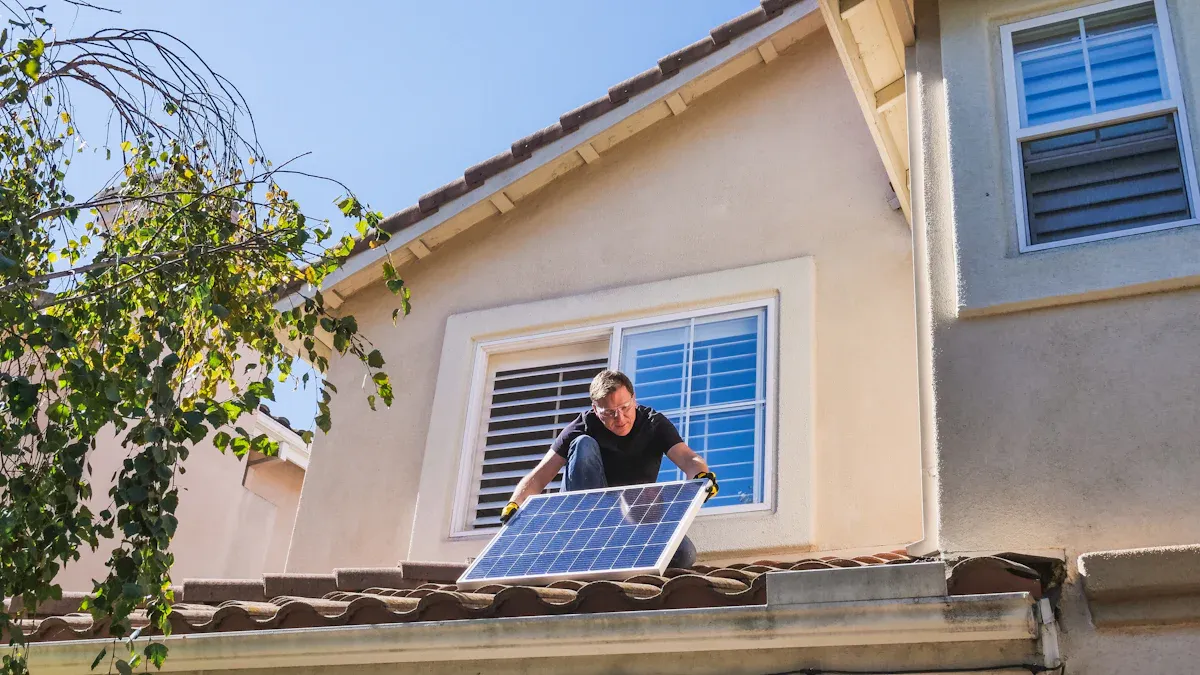
When you look at the price of solar panels, ground-mounted systems usually cost more at the start. You need extra materials for support frames and land preparation. Roof-mounted panels use your existing roof, so you skip those extra costs. Here’s a quick breakdown:
Ground-mounted solar panels have a higher initial investment because you need to build a sturdy base and clear land.
Roof-mounted systems are less expensive to install since you use your roof as the support.
Over time, ground-mounted panels can save you more money. You can place them for maximum sunlight, which means you get more energy and lower bills.
System Type | Initial Cost | Long-Term Savings |
|---|---|---|
Ground-Mounted | Higher | Greater (due to efficiency) |
Roof-Mounted | Lower | Moderate |
If you want to maximize your energy savings, ground-mounted panels might pay off in the long run, even though you spend more upfront.
You’ll notice some big differences when you install these two types of solar panels. Roof-mounted panels go right on top of your house. Installers use brackets and rails to attach them to your roof. This process is usually faster and less disruptive.
Ground-mounted panels need a separate structure. You have to dig holes, pour concrete, and set up steel frames. This takes more time and effort. You also need to make sure the ground is level and clear of obstacles.
Roof-mounted panels use your roof for support, so you don’t lose yard space.
Ground-mounted panels require open land and more construction work.
If your roof faces the wrong direction or has lots of shade, ground-mounted panels let you pick the best spot for sunlight.
Ground-mounted systems work well if your roof isn’t suitable for solar or if you have plenty of open land.
You get more energy from ground-mounted solar panels. You can adjust their angle and direction to catch the most sunlight. Roof-mounted panels depend on your roof’s orientation, which can limit how much sun they get.
Ground-mounted panels usually produce more electricity because you can set them up for optimal sun exposure.
Roof-mounted panels might not get as much sunlight if your roof faces north or is shaded by trees.
Ground-mounted systems can use tracking mounts that follow the sun, boosting your energy output even more.
Feature | Ground-Mounted Solar | Roof-Mounted Solar |
|---|---|---|
Sunlight Exposure | Optimal | Limited by roof angle |
Energy Production | Higher | Lower |
Angle Adjustment | Flexible | Fixed |
If you want the highest energy output, ground-mounted panels give you more control over placement and performance.
When you think about solar panels, you probably wonder how much work goes into keeping them running. Maintenance is a big part of owning a solar system. Let’s look at how ground-mounted and roof-mounted solar panels compare when it comes to cleaning, repairs, and long-term care.
Ground-Mounted Solar Panels
You get easy access with ground-mounted solar panels. You can walk right up to them. Cleaning becomes simple. You can use a hose or a soft brush to remove dust, leaves, or bird droppings. If you need to check for damage or loose wires, you don’t need special equipment. You just inspect the panels from the ground.
Repairs also feel less stressful. If a panel stops working, you can swap it out without climbing a ladder. You save time and avoid safety risks. You can spot problems early because you see the panels every day.
Roof-Mounted Solar Panels
Roof-mounted panels need more effort. You must climb up to your roof. Sometimes you need safety gear or a professional to help. Cleaning takes longer. You might miss spots because you can’t reach every panel easily. If you see a problem, you may need to call an expert.
Repairs can cost more. You pay for labor and equipment. You also risk damaging your roof if you step in the wrong place. Some roofs have steep angles, which makes the job harder.
Tip: If you want to do most of the maintenance yourself, ground-mounted panels make it much easier.
Maintenance Comparison Table
Feature | Ground-Mounted Solar | Roof-Mounted Solar |
|---|---|---|
Cleaning Access | Easy, direct | Difficult, needs ladder |
Repair Process | Simple, safe | Complex, risky |
Inspection Frequency | Frequent, visual | Less frequent |
Professional Help | Rarely needed | Often required |
Safety Concerns | Low | High |
Quick Checklist for Maintenance Needs
Can you reach your panels without climbing?
Do you want to clean panels yourself?
Are you comfortable with heights?
Do you want to spot problems early?
If you answer “yes” to most of these, ground-mounted solar panels might fit your needs better.
Key Points to Remember
Ground-mounted panels make cleaning and repairs easy.
Roof-mounted panels need more effort and sometimes professional help.
You save time and money with ground-mounted systems.
Roof-mounted panels may hide problems until they get worse.
You want your solar panels to last a long time. Easy maintenance helps you keep your system working well. Think about how much work you want to do before you choose between ground-mounted and roof-mounted solar panels.
You want your solar panels to work well and last a long time. The land on your property plays a big role in this. Start by looking at your soil. Stable soil helps keep your solar array secure. If you have rocky or sandy ground, you might need special foundations like helical piles or concrete ballasts. A geotechnical study can help you figure out what works best.
Here’s a quick look at common installation methods and where they fit:
Installation Method | Description | Suitable Conditions |
|---|---|---|
Driven Piers | Steel posts driven deep into stable, non-rocky soil. | Quick and reliable for stable soils. |
Helical Piles | Ground screws ideal for loose or sandy soils. | Challenging soil conditions. |
Concrete Ballasts | Above-ground concrete blocks used to anchor systems. | Sensitive sites with minimal ground penetration. |
Concrete Piers | Durable concrete poured into drilled holes for a sturdy base. | Large-scale installations in various conditions. |
You also need to check for enough open space. Solar panels need sunlight, so avoid areas with lots of shade from trees or buildings. Make sure your site does not flood or erode easily. If you plan to use the land for farming, think about how the panels will affect crops. The height and spacing of your solar array can change how much light reaches the ground.
Tip: Map out setbacks from property lines, roads, and any easements. This helps you follow local rules and avoid future problems.
Money matters when you choose a solar system. Ground-mounted solar panels cost more at first because you need extra materials and labor for the foundation. You also pay for site preparation. Here’s a simple breakdown:
Budget Aspect | Description |
|---|---|
Initial Investment | Total cost of installation, including equipment, labor, and site prep. |
Maintenance Costs | Ongoing cleaning, repairs, and monitoring systems. |
You can get help from federal incentives like the Residential Clean Energy Credit. This lets you deduct 30% of your system’s cost from your taxes. State incentives may be different, so check what’s available where you live. Ground-mounted systems usually take longer to pay off, but they can give you more energy over time. You avoid hidden costs like roof repairs, which makes ground-mounted solar a smart choice for long-term savings.
Think about the future when you pick your solar system. Ground-mounted panels last 25 to 30 years if you take care of them. You might need to replace the inverter every 10 to 12 years. If your energy needs grow, you can add more panels to your system. This makes ground-mounted solar a good fit for families or businesses that expect to use more electricity later.
Ground-mounted solar panels can last up to 30 years with regular maintenance.
You can expand your system as your energy needs increase.
Plan for inverter replacements every decade or so.
Planning ahead helps you get the most out of your solar investment. You set yourself up for years of clean energy and lower bills.
You might feel excited about installing ground-mounted solar panels, but you probably have a lot of questions. You want your system to work well and last a long time. That’s where expert advice makes a big difference. When you talk to solar professionals like the team at Haina Solar, you get answers that fit your property and your goals.
Haina Solar knows how to handle all kinds of solar projects. Their experts look at your land, your budget, and your energy needs. You get a plan that matches your situation. You don’t have to guess about the best mounting system or worry about weather problems. Haina Solar helps you choose the right equipment and layout for your yard or business.
Let’s see what makes Haina Solar stand out:
Feature | Description |
|---|---|
Provides stable and efficient solar installations, ensuring durability in various terrains. | |
Comprehensive Range of Systems | Includes high-quality solar panel mounting hardware and versatile ground-mounted solar kits. |
Tailored Solutions | Designed to meet residential, commercial, and industrial energy needs for optimal performance. |
You get more than just hardware. Haina Solar offers advice on permits, site preparation, and long-term care. Their team helps you avoid common mistakes. You save time and money because you get things right the first time.
Here are some reasons why you should reach out to Haina Solar:
Their systems can handle extreme weather, so you don’t have to worry about storms or wind.
Innovative designs help your solar panels work better and last longer.
You get solutions that fit your project, whether you have a small home or a big business.
You might wonder if your soil is strong enough or if your land floods. Haina Solar checks these things for you. They use advanced tools and experience to make sure your solar array stays safe and stable. You get peace of mind because experts handle the hard parts.
If you want to expand your system later, Haina Solar can help you plan for that. You don’t have to start over or buy new equipment. Their team thinks ahead and helps you grow your solar setup as your needs change.
Tip: Talking to solar experts early helps you avoid problems and get the most out of your investment.
You don’t have to figure everything out alone. Haina Solar guides you through each step. You get clear answers and smart solutions. Your solar project becomes easier, safer, and more efficient. If you want your ground-mounted solar panels to work their best, expert consultation is the way to go.
You’ve seen how ground-mounted solar panels offer better airflow, easy maintenance, and higher efficiency. They let you avoid shading and adjust for maximum sunlight, but they need more space and cost more upfront. Roof-mounted systems blend with your home and use less land, though they may face shading and roof limits.
Think about your energy use, available space, and budget.
Consider how each system fits your property and future needs.
Want expert help? Reach out to Haina Solar for a plan that matches your goals.
You usually need about 640 square feet for a typical home system. This space lets you fit around 30 panels and gives you room for maintenance. If you want to expand later, plan for extra space.
Yes, you can. Installers use special mounting systems like helical piles or adjustable frames. These help keep your panels level and stable, even if your yard is bumpy or sloped.
You don’t need much maintenance. Just clean the panels a few times a year and check for loose wires or debris. You can reach them easily, so you save time and effort.
Yes, they still work. Panels make electricity even on cloudy days or in winter. You might get less power, but your system keeps running. Snow slides off easier if you tilt the panels.
Yes, they are safe if you install them correctly. Most systems have fences or barriers. You can keep kids and pets away from wires and moving parts.
Most panels last 25 to 30 years. You might need to replace the inverter after 10 to 12 years. With regular care, your system keeps working for decades.
They can boost your property value. Buyers like homes with lower energy bills and clean energy. A well-installed system makes your property more attractive.
You can move them, but it takes work. You need to remove the panels and mounting system, then reinstall them at your new place. Most people leave the system for the next owner.


