

Views: 0 Author: Site Editor Publish Time: 2025-09-29 Origin: Site


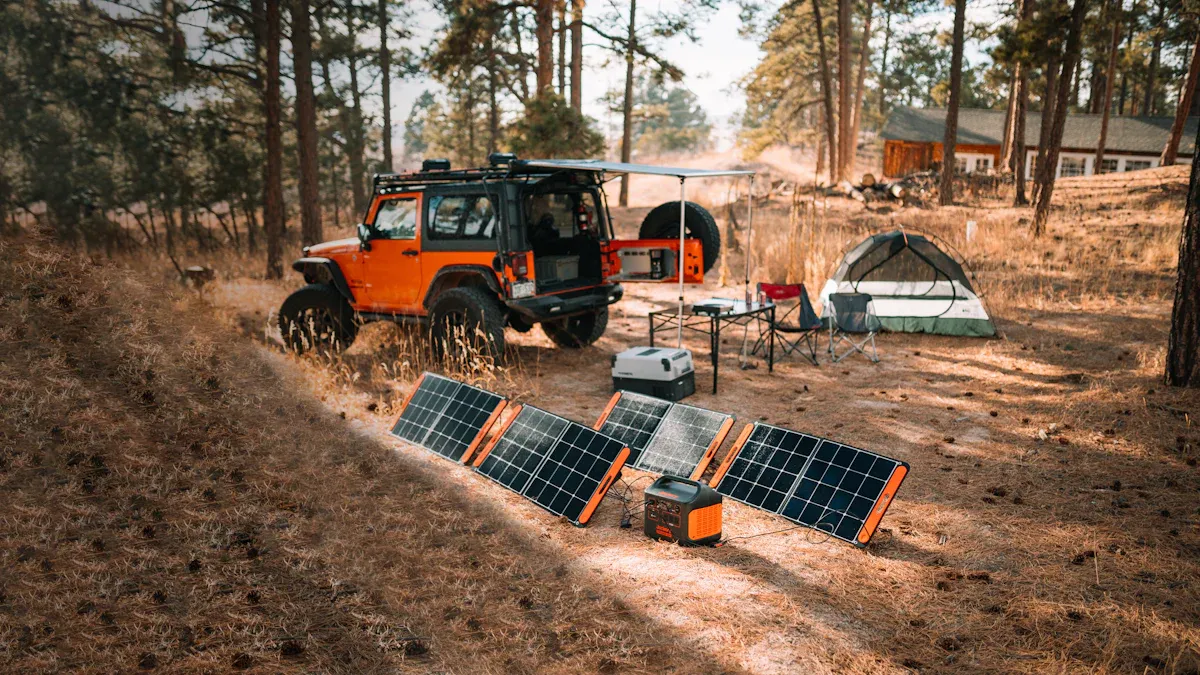
Are you searching for the best 100 watt solar panel for camping? You can pick from brands like Renogy, Jackery, BougeRV, Luvknit, EcoFlow, and RICH SOLAR. More people use solar power each year. The RV solar panels market could reach $2.8 billion by 2033. You need a solar panel that works well, is easy to carry, and is strong. Many panels now turn up to 22% more sunlight into power. They also work in bad weather because they resist water. Look at the quick comparison to find the solar panel that matches your trip.
Pick a solar panel that matches how you camp. Light panels are good if you move a lot. Hard panels work better if you stay longer.
Find solar panels that work well. Some can turn 22% of sunlight into power. This helps you get more energy.
Think about how strong the panel is. Many panels can handle rain and tough weather. This means they will work well for you.
Make sure the panel works with your devices. It should connect easily to your RV battery or power station.
Look at how easy it is to carry. Foldable panels and light materials help you move and set up your panel.
Check the warranty choices. A longer warranty helps you worry less. It also protects your money spent on solar panels.
Know how much power you need. A 100 watt panel can charge small things. It cannot run big items like fridges.
Take care of your panel often. Clean it and change its angle to get the most sunlight.
You want the best solar panels for camping. Here are the top 100 watt solar panels for 2025. These brands give you power you can trust for your RV or campsite.
Renogy 100W Foldable Solar Panel: This panel is strong and works well for RV owners.
Jackery SolarSaga 100: This one is light and easy to carry for campers.
BougeRV 100W Fiberglass Foldable: This panel is tough and bends, which is good for travelers.
Luvknit 100W Solar Panel: This panel is a good choice if you want a fair price and good power.
EcoFlow 100W Flexible Panel: This one looks cool and is easy to put in place.
RICH SOLAR 100W RV Panel: This panel is best for long trips and bad weather.
You may wonder why these panels are special. Each one gives strong power, is simple to set up, and lasts a long time. Some work best in bright sun. Others still work well when it is cloudy. If you camp for a short time, pick a light and easy-to-carry panel. For longer trips, choose a panel that makes more power and has a longer warranty.
Tip: Think about how you camp and how long you stay. If you move a lot, pick a panel you can carry. If you stay in one place, a stiff panel may be better.
Here is a table to help you see how the top 100 watt solar panels are different. You can quickly check the cost, type, and main features.
Brand & Model | Type | Cost | Weight | Best For | Charging Efficiency | Durability | Portability |
|---|---|---|---|---|---|---|---|
Renogy RNG-100D-SS | Rigid | $89.99 | 14 lbs | RVs, long stays | High | Excellent | Moderate |
Jackery SolarSaga 100 | Portable | $199.99 | 9.1 lbs | Quick setup, travel | High | Good | Excellent |
BougeRV Arch 100 | Flexible | $139.99 | 4.6 lbs | Curved surfaces | Moderate | Good | Excellent |
BougeRV ISE192 | Portable | $199.99 | 10 lbs | Frequent moves | High | Good | Excellent |
Luvknit 100W Solar Panel | Portable | $129.99 | 8 lbs | Budget-friendly trips | Moderate | Good | Excellent |
EcoFlow 100W Rigid Panel | Rigid | $167 (2) | 15 lbs | All-black look, RVs | High | Excellent | Moderate |
RICH SOLAR 100W RV Panel | Rigid | $99.99 | 15 lbs | Harsh weather | High | Excellent | Moderate |
The price for 100 watt solar panels is between $70 and $200. The more expensive ones often last longer and have extra features. Most panels make 300 to 600 watt-hours of energy each day. When you compare, look at how much power it makes, how easy it is to carry, and how strong it is. These things are important for camping and outdoor trips.
If you want the best solar panel for your trip, use the table to help you choose. The right panel will make your camping trip easier and more fun.
You want a solar panel that works well in many conditions. The Renogy 100W Foldable Solar Panel stands out for its strong power output and reliable build. This panel uses monocrystalline cells, which means you get high solar panel efficiency. It folds up for easy storage and has a sturdy handle for carrying. You can use it with most RV batteries and portable power stations.
Power Output: 100 watts
Cell Type: Monocrystalline
Weight: 14 lbs
Folded Size: 21.5 x 21.5 x 3.1 in
Unfolded Size: 21.5 x 41.3 x 1.4 in
Compatibility: Works with most 12V batteries and solar generators
Waterproof: Yes (splash-proof)
Warranty: 1 year
You get great performance with this panel. In direct sunlight, it can make 60 watt-hours of energy in just one hour. At high altitudes, it averages almost 50 watts and sometimes reaches 70 watts when the sun is strong. Even on cloudy days, it still produces more power than most other panels. You can trust it for camping trips where you need reliable energy. The build is tough, so it lasts a long time.
Note: Many users say this is the best solar panel for both sunny and cloudy weather. You can count on it for your outdoor adventures.
This panel is heavier than some other portable solar panels.
The price is higher than some budget models.
The included cables may not fit every power station without an adapter.
If you want something lightweight and easy to use, the Jackery SolarSaga 100 is a top pick. It is perfect for camping and travel. You can see the main features in the table below:
Specification | Value |
|---|---|
USB-A Output | 5V⎓2.4A |
USB-C Output | 5V⎓3A |
Peak Power | 100W |
Power Voltage | 18V |
Power Current | 5.55A |
Open Circuit Voltage | 21.6V |
Short Circuit Current | 6A |
Folded Dimensions | 24 x 21 x 1.4 in |
Unfolded Dimensions | 48 x 21 x 0.2 in |
Weight | 10.33 lbs |
Warranty | 2 Years |
Material | Monocrystalline Silicon |
Waterproof | IP65 |
Efficiency Rate | 23% |
Operating Temperature | -10-65℃ (14-149°F) |
You can charge your devices quickly, even in cloudy weather.
The panel is portable and folds flat, so you can carry it easily.
It has USB-A and USB-C ports, so you can charge phones and tablets directly.
The ETFE-laminated material makes it durable and eco-friendly.
The adjustable kickstands help you get the best sunlight.
You can use it for both RVs and tent camping.
Tip: Many campers love how fast this panel charges their gear. It works well in both sun and shade, making it a great choice for outdoor use.
The price is higher than some other 100 watt solar panels.
It does not come with a built-in battery.
The panel is not as flexible as some other models.
You want a panel that is both lightweight and strong. The BougeRV 100W Fiberglass Foldable panel is a great option for flexible solar panels. It is easy to carry and set up, which makes it perfect for camping, RVs, and even boats.
Feature | BougeRV 100W Panel |
|---|---|
Design | Lightweight and compact |
Solar Cell Efficiency | High |
Portability | Foldable and easy to transport |
Application | Ideal for camping, RVs, boats, outdoor use |
Power Output: 100 watts
Weight: 4.6 lbs
Folded Size: 21 x 17 x 2 in
Unfolded Size: 42 x 21 x 1 in
Material: Fiberglass and monocrystalline cells
Waterproof: Yes (splash-proof)
Warranty: 18 months
The panel is very lightweight, so you can move it without trouble.
It folds up small, which saves space in your RV or backpack.
The fiberglass build makes it tough and flexible.
You get high efficiency and good power output for your devices.
It is a sustainable and eco-friendly choice for outdoor power.
Note: If you want portable solar panels that are easy to use and carry, this one is a smart pick for camping.
The panel may not be as durable as rigid solar panels.
It can bend, but it is not as flexible as some other flexible solar panels.
The warranty is shorter than some other brands.
You want a solar panel that is easy to use and packs a punch. The Luvknit 100W Solar Panel gives you just that. It folds up small, so you can carry it anywhere. The kickstand legs help you catch the most sun. You get a zippered pouch to keep your cables safe. Here’s a quick look at what you get:
Feature | Details |
|---|---|
Power Output | 100 watts |
Cell Type | Monocrystalline silicon |
Max Efficiency | 23.7% |
Weight | 8.2 pounds |
Folded Thickness | Just over 1 inch thick |
Charging Outputs | USB A, USB C, DC |
Average Output (Direct Sun) | 48.3 watts |
Performance in Cloudy Conditions | 10.7 watts (average) |
Kickstand Legs | Yes |
Waterproofing & Durability | IP65 Water-Resistant, ETFE Coating |
You get strong solar output, even when the sun hides behind clouds.
The panel is lightweight and portable, so you can take it on any camping trip.
You can charge phones, tablets, and other devices with USB A, USB C, and DC ports.
The kickstand legs make it easy to set up for the best sun angle.
The ETFE coating and IP65 rating keep the panel safe from water and dust.
The bi-fold design makes packing up quick and simple.
Tip: If you want a panel that works well in both sunny and cloudy weather, this one stands out. It produced 55.7 watt-hours in one hour on a sunny day and still managed 17.1 watt-hours when clouds rolled in.
The warranty is not as long as some other brands.
The panel may not be as tough as rigid models if you drop it.
The output drops more than some panels when the sky is very cloudy.
You want a solar panel that bends to fit your RV or camper roof. The EcoFlow 100W Flexible Panel does just that. It is thin, light, and easy to install. You do not need to drill holes or use heavy brackets. Just use industrial adhesive, and you are ready to go.
Specification | Value |
|---|---|
Power Output | 100 watts |
Cell Type | Monocrystalline |
Max Efficiency | 23% |
Weight | About 4 pounds |
Thickness | 0.08 inches |
Daily Output | 400–500Wh (5–6 hrs sunlight) |
Installation | Flexible, adhesive mounting |
Waterproof | Yes |
You can install this panel on curved or uneven surfaces, making it perfect for RVs and campers.
The panel is lightweight, so it will not weigh down your roof or affect fuel use.
You get high efficiency, with up to 23% of sunlight turned into power.
The flexible design means you can use every inch of space for solar.
You do not need special tools or brackets to set it up.
Note: This panel can generate 400–500 watt-hours a day with just a few hours of sun. That is enough to keep your camping gear charged and ready.
The panel is not as sturdy as rigid models, so you need to handle it with care.
It may cost more than some basic rigid panels.
The adhesive setup means you cannot move it easily once installed.
You want a panel that is tough and ready for the road. The RICH SOLAR 100W RV Panel is built for long trips and rough weather. It is a rigid panel, so it can handle bumps and wind. Here are the main specs:
Specification | Value |
|---|---|
Maximum Power (Pmax) | 100W |
Maximum Power Voltage (Vmp) | 18.6V |
Maximum Power Current (Imp) | 5.38A |
Open Circuit Voltage (Voc) | 22.8V |
Short Circuit Current (Isc) | 5.78A |
Maximum System Voltage (Vmax) | 1000VDC |
Weight | 15 lbs |
Dimensions | 39.0 x 21.3 x 1.2 inches |
The panel is very durable and can handle harsh weather.
You get steady solar output, even on long trips.
The panel is easy to install on most RV roofs.
Many users say it charges batteries quickly and works well with other panels.
Customer service is helpful and quick to respond.
"Setup was easy, charged my battery quickly, and I enjoyed passive solar while parked in the shade," says Eric B., a happy user.
The panel is heavier than flexible or portable solar panels.
You need to mount it, so it is not as easy to move around.
The size may not fit smaller campers or tight spaces.
When you look for 100 watt solar panels for camping, you want to know how much power you can get. Power output tells you how many devices you can run. Efficiency shows how well the panel turns sunlight into energy. If you camp in sunny places, your panel will work better. Cloudy skies or shade can lower the output. High temperatures can also make the panel less efficient, but cold weather might help a little.
Here are some things that affect power output and efficiency:
Clear, sunny weather gives you the most solar energy.
Overcast or cloudy days reduce how much power your panel makes.
If you camp in the Northern Hemisphere, face your panel south. In the Southern Hemisphere, face it north.
Tilt your panel to match your latitude for the best results.
Short camping trips with small devices like LED lights need less power. If you have more people or use big appliances, you need more panels.
A 100 watt solar panel can charge phones, tablets, and lights. It cannot run a fridge or air conditioner.
You can add extra systems like solar chargers or wind turbines if you need more energy.
If you want to get the most from your solar panels for camping, check the weather and set up your panel in the right spot. Always review the specs before you buy.
You want portable solar panels that are easy to carry and set up. If you move around a lot while camping, a lightweight panel is best. Foldable panels fit in your RV or backpack. Some panels have handles or cases, so you can grab them and go. Portability matters when you need to change campsites or pack up quickly.
Look for these features:
Foldable design for easy storage.
Carrying handle or case.
Lightweight build, usually under 10 pounds.
Quick setup with kickstands or grommets.
A portable panel helps you stay powered up wherever you camp. You do not need to worry about heavy gear slowing you down.
You want a panel that lasts through many camping trips. Durability means your solar panel can handle bumps, drops, and bad weather. Some panels use tough materials like Oxford fabric or ETFE coating. Others have sturdy kickstands and metal grommets for hanging.
Here is a table showing what makes a panel durable:
Feature | Description |
|---|---|
Sturdy Kickstand | Lets you prop up the panel for better charging and keeps it steady. |
Metal Grommets | Helps you hang the panel safely in different spots. |
Oxford Fabric | Thick and tough, protects the solar cells from scratches and tears. |
Water Resistance | Rated IPX4 or IP65, keeps the panel safe from splashes or sudden rain. |
One-Piece Construction | Compression technique makes the panel strong and reliable. |
ETFE Materials | Lasts longer and works well in many outdoor conditions. |
If you camp in places with rain or dust, pick a panel with a good waterproof rating. A durable panel means you do not have to worry about damage during your adventures.
You want your solar panel to work with your gear. Not every 100 watt solar panel fits every setup. Before you buy, check if the panel matches your RV battery, power station, or devices. Some panels use special connectors. Others come with adapters for different brands. If you use a portable power station, make sure the panel has the right plug. You might need an MC4 to DC adapter or an Anderson connector.
Here are a few things to look for:
Check the voltage and current. Most camping panels use 18V, which works with many solar generators.
Look at the connector type. Common ones are MC4, DC, and Anderson.
See if the panel supports USB charging. This is handy for phones and tablets.
If you want to link panels together, check if they support series or parallel connections.
Tip: Always review the manual or product page. You can avoid headaches if you know what cables and adapters you need before your trip.
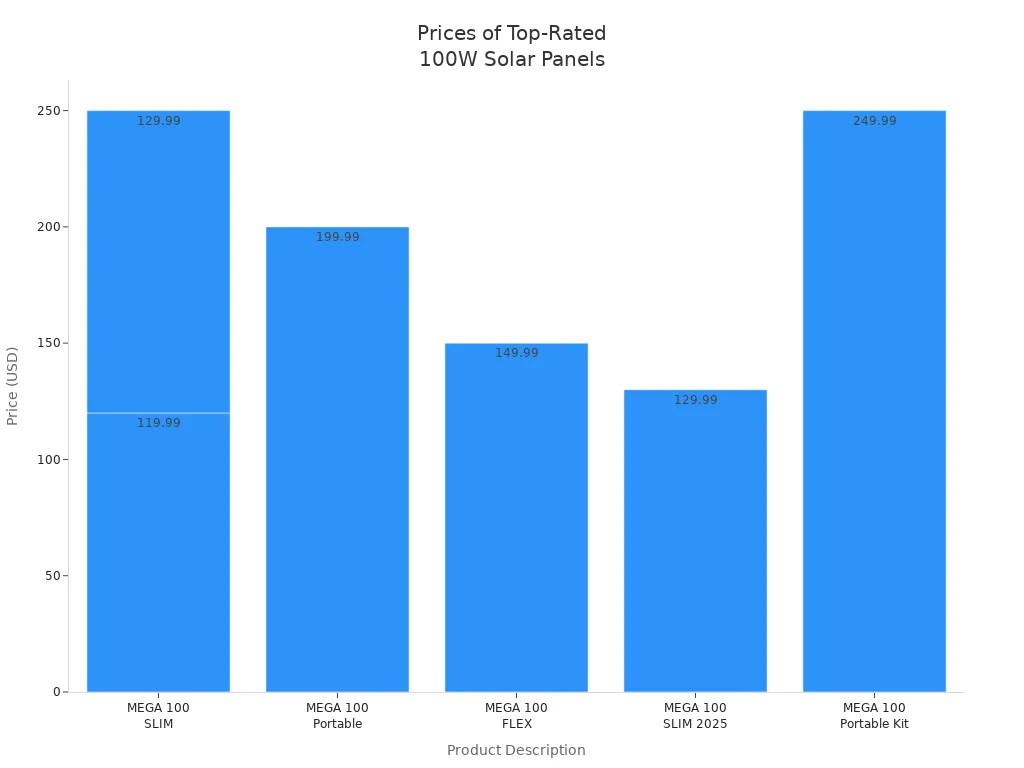
Solar panels come in many price ranges. You want the best value for your money. Some panels cost more because they have higher efficiency, better build, or extra features. Others are budget-friendly but may not last as long. When you compare, think about what you get for the price.
Here’s a table showing prices for top-rated 100 watt solar panels:
Product Description | Price |
|---|---|
MEGA 100 SLIM | $119.99 |
MEGA 100 SLIM | $129.99 |
MEGA 100 Portable | $199.99 |
MEGA 100 FLEX | $149.99 |
MEGA 100 SLIM 2025 | $129.99 |
MEGA 100 Portable Kit | $249.99 |
When you shop, look for these features:
Portability for easy travel
Compact design for small spaces
High efficiency for better power output
Good for off-grid camping
A higher price can mean better performance or longer life. Sometimes, a mid-range panel gives you the best mix of quality and cost. Always read a review or two before you decide.
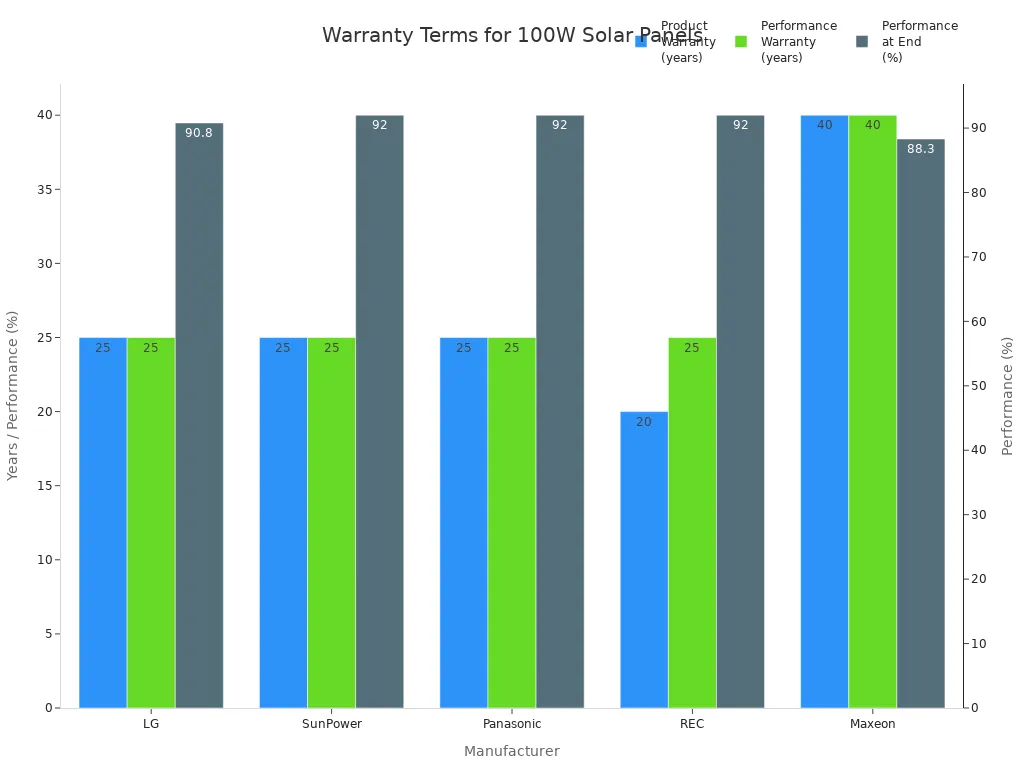
You want peace of mind when you buy a solar panel. A good warranty protects your investment. Most top brands offer long warranties for their panels. Some cover performance for up to 25 years. Others give you equipment coverage for 10 years. If you buy a battery or inverter, check those warranties too.
Here’s a quick look at common warranty terms:
Product Type | Warranty Terms |
|---|---|
Solar panels | 25 year performance, 10 year equipment warranty |
Solar batteries | 5 years (lead-acid), 10 years (lithium-ion) |
Inverters | 12 years |
Charge controllers | 5 years |
You can also see how leading brands compare:
Manufacturer | Product Warranty | Performance Warranty | Labor Coverage |
|---|---|---|---|
LG | 25 years | 90.8% at 25 years | Up to $450 |
SunPower | 25 years | 92% at 25 years | Included |
Panasonic | 25 years | 92% at 25 years | Limited |
REC | 20 years | 92% at 25 years | None |
Maxeon | 40 years | 88.3% at 40 years | Included |
If you have questions, many brands offer customer support by phone. For example, you can call 800-377-4480 for help with your solar gear.
Note: A long warranty and good support mean you can trust your panel for many camping trips. Always keep your receipt and warranty card in a safe place.
Many campers like using solar panels for their trips. A 100 watt solar panel gives you many good things. You can camp off-grid and do not need loud generators. You also do not have to stay at busy campgrounds for power. Solar panels help you save money over time. You spend less on fuel and do not need costly hookups. Using solar energy is better for the planet. You make less pollution and help nature. Solar panels are quiet and easy to use. They do not need much care compared to other power sources. If you sell your RV, solar panels can make it worth more. Many people want eco-friendly RVs now.
Solar panels let you travel to new places. You can camp almost anywhere and keep your devices charged.
Most portable solar panels are light and simple to set up. You do not need heavy gear or tricky wires. Just check your camping gear and pick a panel that works for you. Solar panels work with most camping batteries and power stations. You get steady power for your lights, phones, and small gadgets.
Solar panels have many good points, but there are some problems too. Here are some things to think about:
How much sun you get changes how much power you make. Cloudy weather, mornings, or evenings mean less power.
Shade from trees or buildings can lower your panel’s power. Even a little shade can make a big change.
Hot days can make your solar panel work less well. Airflow helps, but you may see less power when it is very hot.
Dirt and dust can block the sun. You need to clean your panel often to keep it working well.
Getting the right angle and direction matters. It can be hard to set up your panel just right, especially if you move campsites a lot.
Check your solar panel every day when you camp. Wipe off dirt and point it at the sun. This helps you get the most power for your trip.
Solar panels work best if you set them up and take care of them. If you use portable solar panels, moving around can make it hard to find the best spot for sun. Always read your panel’s guide and watch the weather. With a little work, you can enjoy solar power while camping, even with some small problems.
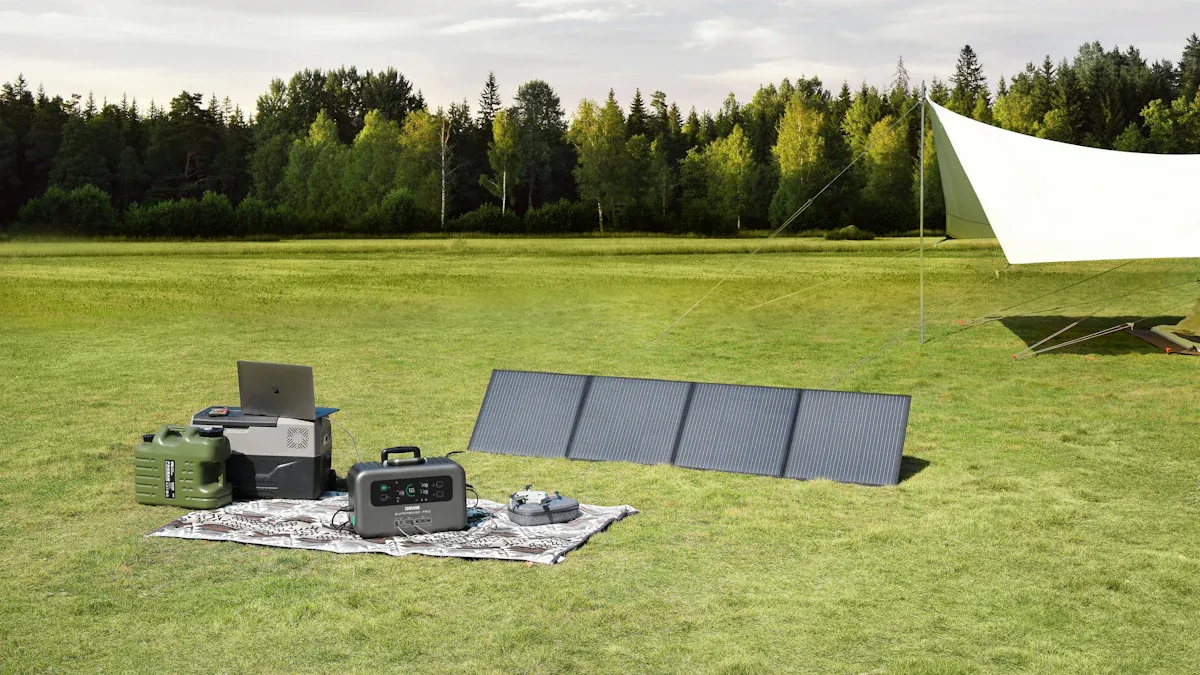
Portable solar panels for camping make your outdoor trips easier and more fun. You get clean energy without noisy generators or searching for outlets. You can power your lights, charge your phone, and keep your gear running, even when you camp far from the city. Let’s look at how you can set up, care for, and get the most from your 100 watt solar panel.
Setting up your solar panels for camping does not have to be hard. You just need to follow a few simple steps to get the best output. Here’s what you should do:
Clean your panel before you use it. Dust and dirt block sunlight, so wipe it with a soft cloth and a little soapy water.
Place your panel where it gets direct sun. Shade from trees or tents can lower your power.
Adjust the angle of your panel. Point it straight at the sun for the highest energy.
Make sure air can flow around your panel. Good ventilation keeps it cool and working well.
Remove anything that might block the sun, like branches or gear.
Use a quality charge controller. This device helps your panel send the right amount of power to your battery.
Watch your system with a monitor. You can spot problems early and fix them fast.
Tip: Move your panel during the day to follow the sun. You will see a big boost in your solar output.
Taking care of your portable solar panels helps them last longer. You do not need special tools or skills. Just keep these habits:
Clean your panel often. Even a thin layer of dust can lower your energy.
Check the angle and position every morning. The sun moves, so your panel should too.
Keep your panel away from shade. If you see shadows, move it to a better spot.
Make sure nothing blocks the air around your panel. Heat can hurt your solar cells.
Look for branches, leaves, or dirt that might cover your panel.
Use a good charge controller. It protects your battery and helps your panel work better.
Watch your system’s performance. If you see a drop in power, check for problems right away.
Note: A little care goes a long way. You will get more power and your panel will last for many camping trips.
You want the most energy from your 100 watt solar panel, even when the weather changes. Try these strategies:
Use an MPPT charge controller. This smart device helps your panel give the best power, even on cloudy days.
Pick high-efficiency panels. They turn more sunlight into energy, so you get more from every ray.
Place your panel in the sunniest spot. Even if it is cloudy, a good position helps.
Bring a portable battery backup. You can store extra solar energy for nighttime or rainy days.
If you review your setup and make small changes, you will see a big difference in your solar power. You can camp longer and worry less about running out of energy.
Portable solar panels for camping give you freedom and peace of mind. With the right setup, care, and smart choices, you can enjoy every trip and keep your gear charged.
You want your camping trips to be easy and fun. Picking the best solar panels for camping can make a big difference. You get clean power for your lights, phone, and small devices. You do not need to worry about noisy generators or finding outlets. The right solar panel gives you freedom to camp anywhere.
Let’s look at what matters most when you choose a 100 watt solar panel. You need a panel that fits your space, gives enough output, and works with your gear. You also want something simple to set up and store. Here’s a quick table to help you see the key points:
Factor | Description |
|---|---|
Packed Size | Pick a panel that gives strong solar output but stays compact. This helps when you have limited space in your car or RV. |
Power Needs | Think about what you want to charge. Some campers need more power for extra devices. Others just want to keep a phone charged. |
Ease of Use | Choose a panel that is easy to set up and move. You want to spend more time enjoying camping, not fussing with gear. |
Compatibility | Make sure your panel connects with your power station or devices. Check the ports before you buy. |
You saw in each review that brands like Renogy, Jackery, BougeRV, Luvknit, EcoFlow, and RICH SOLAR all offer strong choices. If you want a portable solar panel for short trips, Jackery and BougeRV are easy to carry and set up. For longer camping adventures, Renogy and RICH SOLAR give you tough panels with steady output. EcoFlow and Luvknit work well if you need flexible panels for curved surfaces or want a fair price.
You should match your solar panel to your camping style. If you move campsites often, pick a lightweight, portable panel. If you stay in one spot, a rigid panel with higher output may be better. Always check the warranty and support before you buy. Good customer service helps if you have questions or problems.
Tip: Try to set up your solar panel in direct sun and keep it clean. You will get the most power for your camping needs.
You can enjoy camping more when you have reliable solar power. The best solar panel for you depends on your space, power needs, and how you camp. Take your time, read a review or two, and choose the panel that fits your adventure. You will love the freedom and quiet energy that portable solar panels bring to your trips.
You have many great solar options for camping. Each panel gives you strong solar output and easy setup. If you want portable solar panels, look for a panel that matches your camping style and budget. Some panels work better for short trips, while others last longer for big adventures. Always check the review and see which 100 watt solar panel fits your needs. Solar power lets you enjoy camping anywhere. Have you tried a solar panel on your trip? Share your story or ask a question below!
You can charge phones, tablets, cameras, and small lights. A 100 watt portable solar panel works great for basic needs. It will not run big appliances like a fridge or air conditioner, but it keeps your small devices powered up.
You just need a solar panel, a charge controller, and a battery. Connect the panel to the controller, then to the battery. This off-grid camping setup lets you store solar energy for use anytime, even after sunset.
Yes, you can use these panels for off-grid trips. They work best for short stays or as a backup. If you want to live off-grid full-time, you may need more panels for a high power output.
A lightweight solar panel is easy to carry and set up. You can move it around your campsite without trouble. It fits in your RV or backpack, so you do not have to worry about extra weight.
Yes, you can use a solar panel as your main solar charging solution for small devices. For bigger needs, you might need more panels or a bigger battery. Always check your power needs before your trip.
Place your panel in direct sunlight. Clean it often to remove dust. Adjust the angle to face the sun. These steps help you get the most solar energy during your camping trip.
A panel with high power output charges your devices faster. You can run more gadgets at once. This is helpful if you camp with family or use lots of electronics.


