

Views: 0 Author: Site Editor Publish Time: 2025-09-25 Origin: Site


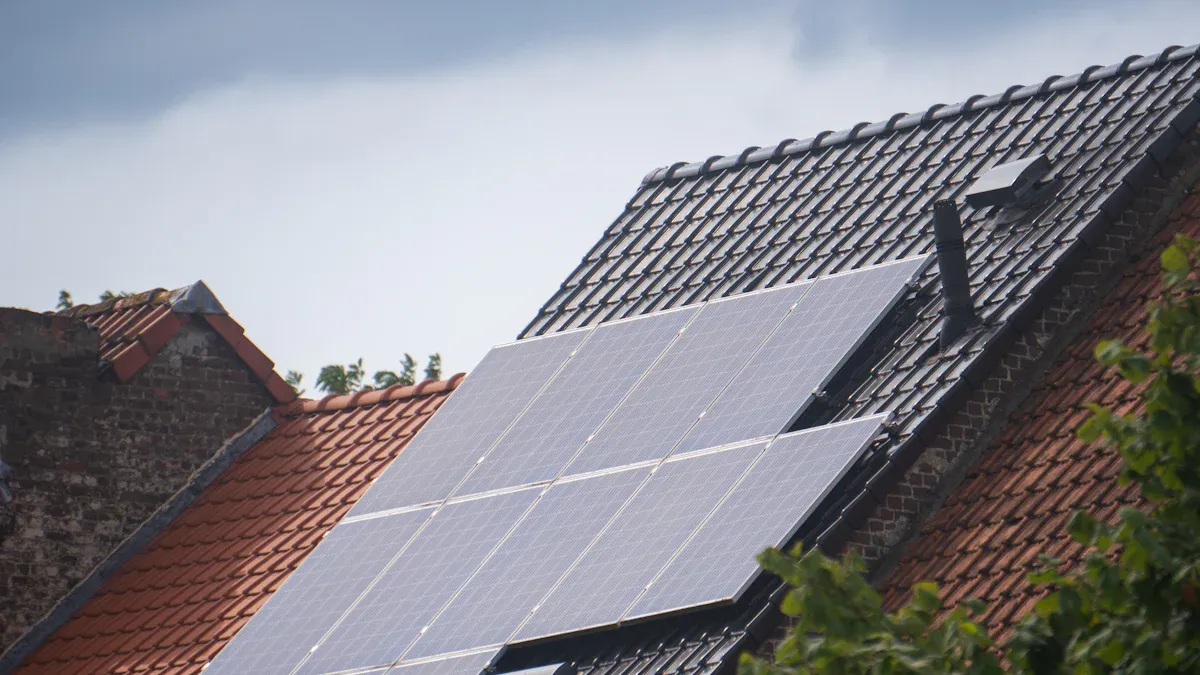
Looking for the best solar panel kit for your home in 2025? Some top choices are Canadian Solar, Maxeon, Aiko Solar, VSUN, REC, Qcells, and US-made kits. More than 7.3 million homes in the U.S. use solar power now. This number keeps going up.
Statistic | Value |
|---|---|
Homes powered by solar energy | Over 7.3 million U.S. homes |
Projected solar-powered residential buildings by 2050 | Up to 36% of U.S. residential buildings |
Projected homeowners with solar panels by 2030 | Up to 13% of US homeowners |
When you pick a solar panel kit, look for these features:
Photovoltaic modules that work well and last long.
Inverters that are reliable and have smart features.
Mounting hardware that is strong and keeps panels safe.
Batteries that hold a lot of power and last many years.
Smart charge controllers that help save energy.
Solar panel efficiency is very important in 2025. Trusted brands help you get the best panels for your home. Use this guide to help you choose the right kit.
More than 7.3 million homes in the U.S. use solar power now. This number keeps getting bigger every year.
Pick solar panel kits that work well and last a long time. Make sure they have good inverters and strong mounting parts. This helps them work their best.
The best brands in 2025 are Aiko Solar, Maxeon, and Canadian Solar. These brands make panels that save the most energy and money.
Think about what kind of solar panel you want. Monocrystalline panels work the best. Polycrystalline and thin-film panels cost less money.
Try to get solar kits with new technology. Smart charge controllers and energy storage systems help you save more money.
Check how much energy your home uses and look at your roof. This helps you pick the right solar panel kit for your house.
Use federal and local deals like tax credits and rebates. These can help lower the price of your solar system.
Take care of your solar panels by cleaning them and checking for damage. This helps your solar system work well for many years.
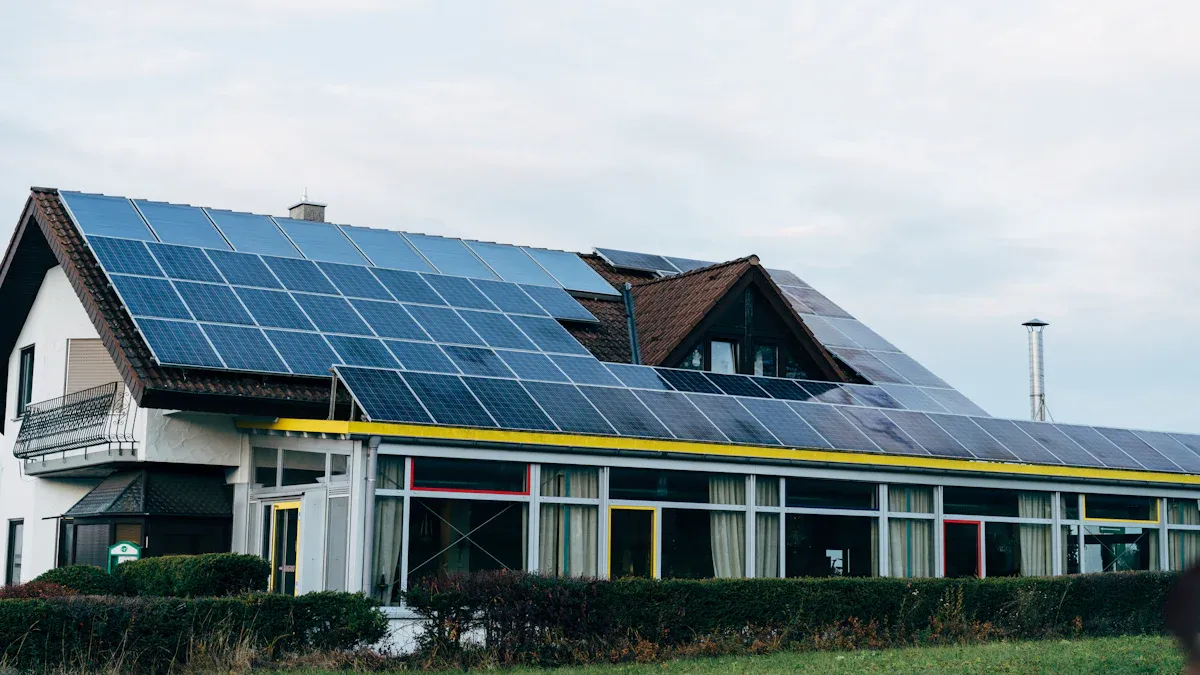
You want a good solar panel kit for your house. In 2025, some brands are better than others. Canadian Solar, Maxeon, and Aiko Solar are top choices. VSUN, REC, Qcells, and US-made kits are also strong picks. These kits use the best panels and new technology. They give you lots of power and steady energy.
Here is a simple chart about the top three brands:
Manufacturer | Efficiency Rating | Notes |
|---|---|---|
Aiko Solar | 24.8% | NEOSTAR 3P54 series, leading efficiency in 2025. |
Maxeon | 24.1% | Gen 7 modules, competitive performance, with Gen 8 expected to exceed 25%. |
Canadian Solar | 22.5% | Offers a 460-watt panel, utilizing TOPCon technology for improved efficiency. |
Aiko Solar’s NEOSTAR 3P54 series has the highest efficiency. Maxeon’s Gen 7 modules work very well too. Canadian Solar uses TOPCon technology to make their panels better. These brands are the best for solar panels in 2025.
There are many solar panel kits you can buy. The best ones have special features. Here are some reasons these kits are better:
High efficiency: Bifacial panels can make 30% more power if there is reflection. Monocrystalline panels can reach 22% efficiency.
Advanced technology: TOPCon modules are newer than PERC panels. This makes them work better and cost less.
Energy storage: Battery systems get 20% bigger every year. You get more power and steady energy at home.
AI integration: Smart monitoring uses AI to lower costs by 20%. You save money and can check your system easily.
Portability: Portable panels are getting more popular. You can use them for backup or outside.
You get more for your money with these features. The best solar panels give you strong power and use new technology. You also get better results and pay less. These kits help you save energy and money. You can trust these brands to give you a great system for your house.
When you pick a solar panel kit, you want to know how it works. You should look at the panel type, how well it makes power, and how long it lasts. Most top kits use monocrystalline panels. These panels make lots of power and work very well. Polycrystalline panels cost less but do not work as well. Thin-film panels are light and bend easily, but they do not make as much power.
Here is a table with the main technical details for the best solar panel kits in 2025:
Type of Solar Panel | Efficiency Range | Durability & Warranty |
|---|---|---|
Monocrystalline | 18-22% | 25 years or more warranty, high durability |
Polycrystalline | 15-17% | 25 years or more warranty, moderate durability |
Thin-Film | 10-13% | 25 years or more warranty, lower durability |
SunPower panels make lots of power and have strong warranties. Canadian Solar panels are a good mix of price and performance. Q CELLS panels give good power and fair prices. Tesla Solar panels look cool and use new technology. Each kit uses smart technology to make more energy and work better.
Tip: Pick monocrystalline panels if you want the best power and value for many years.
You want to spend your money wisely. The price of solar panel kits changes by brand, panel type, and size. Some kits cost more because they use new technology and work better. Other kits are cheaper and still work well.
Here is a table that shows the price per watt for top brands in 2025:
Manufacturer | Price per Watt |
|---|---|
Maxeon 3 | $4.25/W |
Silfab Elite SIL-410 BG | $3.90 – $4.50/W |
Q Cells Q. Peak Duo BLK ML-G10+ | $3.50 – $3.90/W |
Mission Solar MSE PERC 60 BLK | $3.00 – $3.40/W |
Canadian Solar HiKu dual cell PERC | $3.00 – $3.80/W |
Solaria PowerXT Pure Black | $2.75 – $3.25/W |
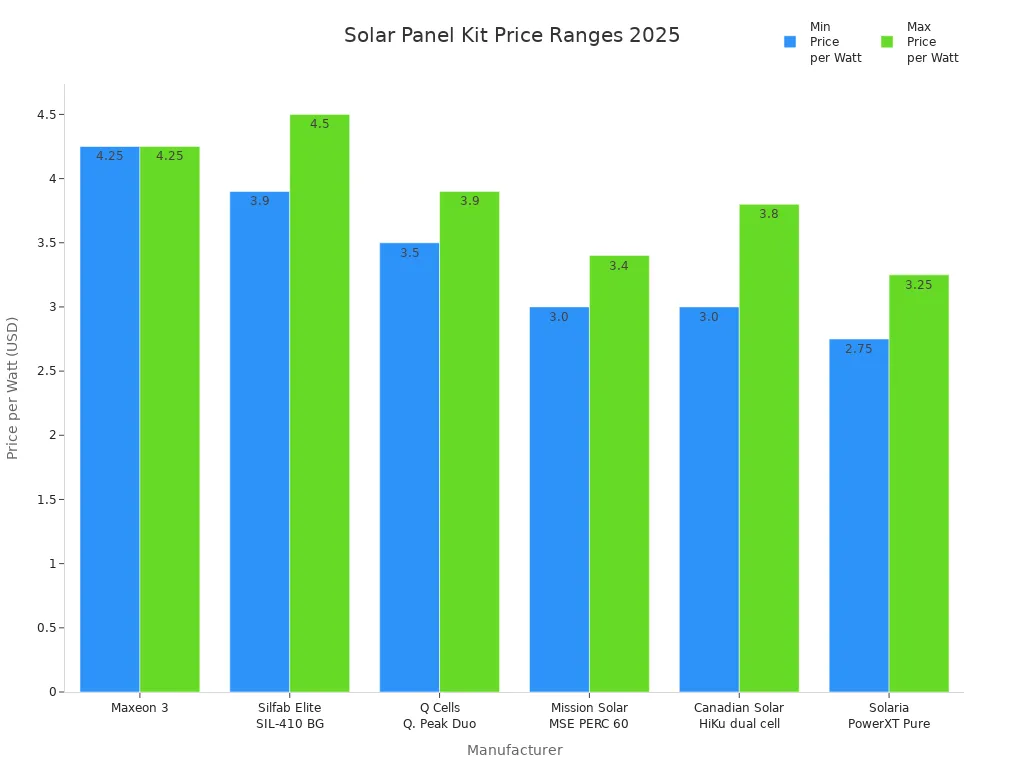
Solaria PowerXT panels have the lowest price per watt. Maxeon panels cost more but work the best. Canadian Solar panels are a good deal for the price and power. Q CELLS panels give strong power for a fair price.
Experts use shipment numbers, technology, and how well panels work to rate these kits. PV InfoLink and TrendForce check shipment numbers. Experts update panel data every few months. These sources help you compare solar panel kits and pick the best one for your home.
Canadian Solar panels work well in many places. They make power even when light is weak. You get steady energy in hot weather. The panels can handle wind, snow, and hail. Your system stays safe for a long time. The half-cut cell design helps with shade. This is good for roofs with odd shapes. Each panel is made to work the same. You do not get hot spots. You get even energy from every panel.
Feature | Description |
|---|---|
Efficiency | Makes power when light is low |
High-Heat Performance | Keeps working in hot weather |
Durability | Stays strong in bad weather for years |
Consistent Performance | All cells give the same output |
Shading Tolerance | Half-cut cells help with shade |
Long-Term Output | 2% less power first year, 86% after 25 years |
Canadian Solar panels are a good deal. The CS3N-390MS model gives 19.2% efficiency. The price is fair for what you get. You save money now and later. The panels last a long time and keep working well. Many people pick this kit for its price and how well it works.
It is easy to install Canadian Solar panels. The panels are light, so installers can carry them. The mounting parts are strong and fit most roofs. You can use these panels on new or old homes. The half-cut cell design helps if your roof has shade or is shaped oddly.
Pros:
Works well in low light
Very strong against bad weather
Good price for high efficiency
Easy to put on most homes
Handles shade better
Cons:
Not as efficient as some top panels
Loses more power in the first year than Maxeon
Maxeon panels are the best for homes. They have 22.7% efficiency, which is very high. You get more energy from less space. Over 25 years, they give 60% more power than many other brands. The panels work well in hot weather. You do not lose much power in summer. Maxeon panels lose the least power over time. Tests on over 800,000 panels prove this. You can trust these panels to last for decades.
Feature | Description |
|---|---|
Panel Efficiency | 22.7% efficiency, very high |
Durability | Very strong in tough places |
Degradation Rate | Loses only 0.25% power each year |
Lifetime Energy Output | 60% more power in 25 years |
Warranty | Best 25-year warranty |
Temperature Coefficient | Handles heat very well |
Long-term Output Retention | Keeps 88.3% power after 40 years |
Maxeon panels cost more than most others. You pay extra for the best panels and new technology. The higher price means better efficiency and longer life. Many people think it is a smart buy. The panels keep working well for many years.
You need a skilled installer for Maxeon panels. The panels are tough but need careful handling. The mounting system fits many roofs. You get clear instructions and good help from the company. Most installers find it easy if they follow the steps.
Pros:
Highest efficiency for homes
Keeps power for many years
Strong warranty and very tough
Works great in hot weather
Cons:
Costs more than most panels
Needs a pro to install
Aiko Solar NEOSTAR 3P54 panels are the most efficient. They reach up to 25% efficiency, which is the best in 2025. You need fewer panels to power your home. This saves space and gives you more energy from each panel. Experts say these are the most efficient panels for homes.
Panel Model | Efficiency Rating |
|---|---|
AIKO Neostar 3P54 500W | 25.0% |
NEOSTAR 3P54 series can reach 25% efficiency
These are some of the most efficient panels in 2025
Aiko Solar panels cost more than most regular panels. You pay more for the best technology and top efficiency. Many people pick these panels for their long-term value. You get more power from each panel, so you may need fewer for your house.
You need a pro to install Aiko Solar NEOSTAR 3P54 panels. The panels use new technology and need careful setup. The mounting parts fit many roof types. Installers follow clear steps to make sure your system works well.
Pros:
Most efficient solar panels in 2025
Fewer panels needed, saves space
New technology for great performance
Keeps strong power for a long time
Cons:
Costs more than regular panels
Needs a pro to install
The VSUN solar panel kit works well for homes. VSUN panels often reach more than 20% efficiency. Some models go up to 22%. You get more energy from less roof space. The panels use strong materials. They keep working in bad weather like storms or heat. Your system makes energy even when the weather is tough. The power stays steady over time. You get reliable energy for your house.
Here is a table with the special features and technology in the VSUN Kit:
Feature/Technology | Description |
|---|---|
High Efficiency | VSUN panels often go past 20% efficiency, some reach 22%. |
Durability | Made with strong materials to handle rough weather. |
Aesthetic Appeal | Modern look that fits many home styles. |
Eco-Friendly Practices | Uses green methods to make panels and dispose of them safely. |
Comprehensive Warranty | Has a product warranty for up to 10 years and a performance warranty for 25 years. |
VSUN gives you top solar panels for your home. The technology helps you get more energy. Your system keeps working for many years.
VSUN panels are a good deal for most people. You pay less than some expensive brands. You still get high efficiency and strong power. The warranty protects your panels for up to 25 years. You save money on fixing or replacing them. Many people choose VSUN because it is a good mix of price and quality.
VSUN panels are easy to put on your roof. The panels look nice and fit most roofs. Installers like that they are light and easy to mount. You can use these panels for new homes or upgrades. The system works with many inverters and batteries.
Pros:
High efficiency for home solar panels
Strong in bad weather
Looks good on your house
Made with eco-friendly methods
Long warranty for safety
Cons:
Not the very best for efficiency
Has fewer smart features than top kits
Tip: If you want a solar kit that is not too expensive and works well, VSUN is a smart pick for your home.
REC panels give strong power and high output. You get steady energy even when sunlight is weak. The panels use new technology to keep efficiency high. Many people trust REC for long-lasting and steady power.
REC panels cost less than some top brands. You still get good efficiency for your money. The warranty keeps your panels safe for many years. You save money because the panels last a long time.
You need a pro to install REC panels. The job can be hard because you want the best results and to follow local rules. Most installers say to follow the steps closely for the best system.
Here is a table that compares how hard it is to install and how happy homeowners are:
Aspect | REC Kit |
|---|---|
Installation Complexity | Harder because pros are needed for rules and best results |
Homeowner Satisfaction | High because of strong warranty and good panels |
Note: People are happy with REC panels because they last long and work well. The job may take longer, but you get better results.
Pros:
Strong power and output
Good efficiency for home solar panels
Long warranty for safety
High homeowner happiness
Cons:
Harder to install
Needs a pro for best results
Qcells panels give steady power for your home. You get good output and efficiency. The panels use new technology to keep energy high. Many people like Qcells for their strong build and steady results.
Qcells panels cost a fair amount. The kit gives good value for the quality and efficiency. The panels last many years, so you save money on repairs.
Qcells panels are easy to put on your roof. The panels fit most roof types and work with many inverters. Installers like the simple mounting system. You can add more panels later if you want more energy.
Here is a table with the main good and bad points of the Qcells Kit:
Advantages | Disadvantages |
|---|---|
Environmentally Friendly | Solar Panels Don’t Work at Night |
Low Maintenance | Solar Panels Need Daylight |
Energy Independence | Land Use and Space Concerns |
Job Creation |
Tip: Qcells panels help you use your own energy and support green jobs. You need sunlight for the best results, so put your panels in sunny spots.
Pros:
Steady power and output
Good for the environment
Easy to take care of
Simple to install and upgrade
Cons:
Panels do not work at night
Needs sunlight for best power
May need more space for bigger systems
You want strong performance from your home solar kit. Haina Home Solar Kit gives you reliable energy every day. The panels use advanced monocrystalline cells. These cells help you get more power from sunlight. You see steady output even when the weather changes. The panel design resists heat and cold. You get good results in summer and winter. Haina panels work well on roofs with shade. The smart inverter helps you use energy more efficiently. You can monitor your system with a mobile app. This feature lets you check your panel output and spot problems early.
Tip: You get the most from your solar panels if you place them in sunny spots and keep them clean.
You want to know how much you will spend. Haina Home Solar Kit offers good value for the price. The kit costs less than some premium brands. You get high-quality panels and a strong inverter. The price includes mounting hardware and basic installation. You save money because the panels last many years. The warranty covers your panels for up to 25 years. You do not pay much for repairs or replacements. Many homeowners choose Haina for its balance of cost and quality.
Item | Included in Kit | Warranty Length |
|---|---|---|
Solar Panels | Yes | 25 Years |
Inverter | Yes | 10 Years |
Mounting Hardware | Yes | 10 Years |
Monitoring System | Yes | 5 Years |
You want easy installation for your solar kit. Haina Home Solar Kit comes with clear instructions. Most installers finish the job in one day. The panels fit many roof types. You can use the kit for new homes or upgrades. The mounting system keeps your panels safe in strong winds. You get support from Haina if you have questions. You can add more panels later if you need more power. The kit works with most battery systems.
Note: You should hire a certified installer to make sure your solar panel system works safely and meets local rules.
You want to know the strengths and weaknesses before you buy. Here is a quick list to help you decide:
Pros:
Reliable performance in all seasons
Good value for the price
Easy to install and expand
Long warranty for panels
Smart monitoring system
Cons:
Lower efficiency than the very best panels
Monitoring system has a shorter warranty
May need extra batteries for full backup
You get a strong solar kit that fits most homes. Haina Home Solar Kit gives you steady power, easy installation, and good value. You can trust this kit for your energy needs.
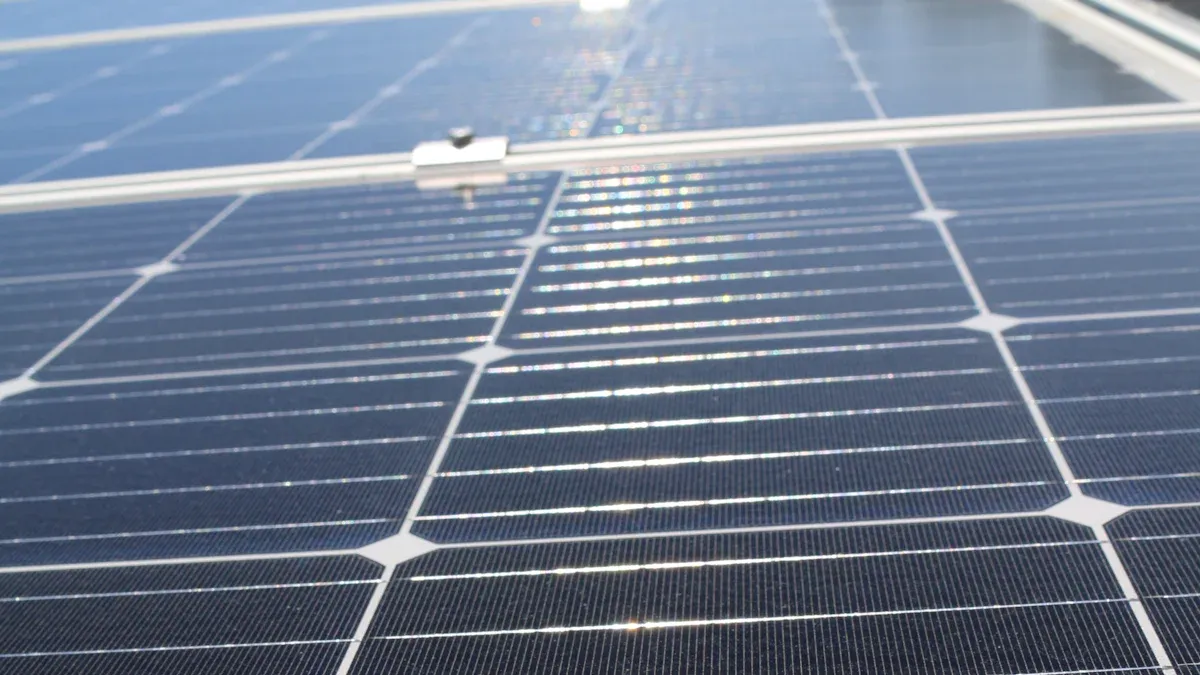
You want to get the most power from your solar panels. Solar panel efficiency shows how much sunlight your panel can turn into electricity. If you have limited roof space, higher efficiency panels help you make more energy. This means you can use fewer panels and still power your home.
Solar panel efficiency matters because it affects how much electricity you get from each square meter. When you choose the best panels, you make the most of your roof space and save more money over time. Higher efficiency also means you can lower or even remove your electricity bills.
Here is a table that shows the top solar panel brands and their efficiency in 2025:
Brand | Efficiency | Power Output | Warranty | Cost per Watt |
|---|---|---|---|---|
Maxeon 6 | 22.8% | 440W | 40 years | $3.05 |
REC Alpha Pure | 22.2% | 410W | 25 years | $2.49 |
Panasonic Evervolt | 22.2% | 430W | 25 years | $2.69 |
Canadian Solar TOPHiKu6 | 22% | 450W | 30 years | $2.73 |
Jinko Solar Tiger Neo | 22.02% | 440W | 30 years | $2.82 |
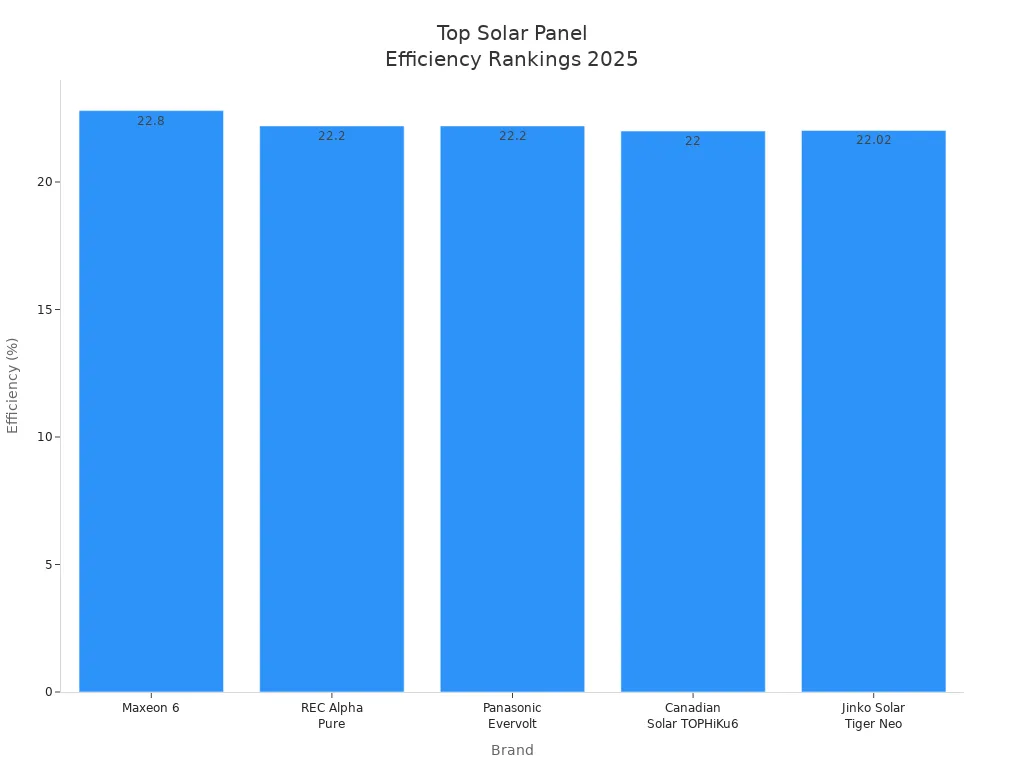
Aiko Solar’s Neostar range stands out with up to 24.1% efficiency. You get more electricity from the same amount of sunlight. Other top brands like SunPower, REC, and Winaico also reach above 22%. Mainstream brands such as Jinko, Trina, and Longi usually have efficiency between 21% and 22.5%. If you want the best, Aiko Solar panels give you the highest real-world performance.
Tip: Choose high efficiency panels if you have a small roof or want to maximize your energy savings.
Solar panel efficiency helps you save money every year. When you install the best solar panels, you can save about $1,530 on your energy bills each year. Most homeowners see a payback period of eight to nine years. After that, you keep saving money for many years.
You can save between $34,000 and $120,000 over 25 years with a solar system sized from 5kW to 10kW.
Higher efficiency panels let you use less space and get more power, which means bigger savings.
You can reduce your dependence on the grid and protect yourself from rising energy costs.
Solar panel efficiency means you get more electricity from every panel. This helps you lower your bills and increase your return on investment. If you want to make the most of your solar system, pick panels with the highest efficiency.
Note: The more efficient your panels, the more you save over time. You also help the environment by using clean energy.
You want the best solar panel kit for your house. First, think about how much energy your family uses. Where you live and your weather matter a lot. If you live somewhere sunny, your panels will make more power. If your roof faces the sun, you get more energy. Shade from trees or buildings can lower your power. Check if your roof is strong and in good shape. A good roof keeps your solar system safe. Look at your electricity bills to see how much power you use. This helps you pick the right size kit.
Here are the main things to check:
Where you live and your weather
Which way your roof faces and if there is shade
What kind of roof you have and if it is strong
How much power you use and how much it costs
Tip: Write down your power use each month. This makes it easier to choose the right kit size.
Solar panel kits have different prices. In 2025, most people pay about $21,816 for a home solar system before discounts. The price is about $3.03 for each watt of power. Some brands cost less per watt, like VSUN ($2.92), Hyundai ($2.93), JA Solar ($2.94), Trina Solar ($2.95), and Mission Solar ($2.97). You can save money with the federal solar tax credit. This gives you 30% off your total cost, which is about $6,500. Many states and cities give extra savings, like rebates or rewards for making power. These deals help you pay less for your solar kit.
Most solar systems cost about $21,816
Cheaper brands cost $2.92–$3.03 per watt
Federal tax credit saves you 30%, about $6,500
Local deals: tax credits, rebates, and rewards
Note: Look for local deals before you buy your solar kit. You could save a lot of money.
You want your solar panels to work well and last long. Follow these steps to install your kit safely:
Step | Description |
|---|---|
1 | Pick and buy your panels, batteries, charge controller, inverter, wires, fuses, and mounts. Make sure all parts fit together. |
2 | Get the right permits and set up a safe work area. Wear safety gear. |
3 | Put the mounting system on your roof. Make sure it is tight and strong. |
4 | Lift and attach the panels. Connect them for the right power. |
5 | Hook up the charge controller to the panels and batteries. |
6 | Place batteries in a spot with fresh air. Follow the setup steps. |
7 | Mount the inverter in a dry place. Connect it to the battery. |
8 | Connect the system to your house wiring. Hire a licensed electrician for safety. |
9 | Test each part and the whole system to make sure it works. |
10 | Watch your system and do regular checks to keep it working well. |
Tip: Kits made in the US often have strong panels, inverters, and racks. These kits help you follow local rules and get better warranties.
You might think putting in a solar panel kit is simple. Many people want to save money by doing it themselves. But working with solar panels can be dangerous. High-voltage DC electricity can hurt you badly. Even panels that are not turned on can still shock you. Climbing ladders and working on sloped roofs is risky. Weather can change fast and make it more dangerous.
Here are some problems you might face:
Bad wiring or grounding can start fires.
Loose panels can break your roof or make it leak.
You must follow local rules for solar panel setups.
If you skip permits, you can get fines or delays.
The job is harder than it looks. Mistakes can cause fires.
Tip: For safety and the best results, hire a certified installer for your solar panel kit.
You want your solar panels to last a long time. Doing regular checks helps your system work well. Watch your solar output often to see if it drops. Look at your panels, inverters, and mounts for damage or wear.
Follow these steps to keep your solar panel kit working:
Clean your panels twice a year, or more if it is dusty or windy.
Use a soft brush and soapy water to clean off dirt.
Check for animal damage and make sure wires are safe.
Look for nests or trash under the panels.
Clean in the morning and use warm water to avoid cracks.
Note: Solar panels do not need much care, but cleaning and checking them helps you get the most power.
You might want to add more panels or upgrade your system later. You can expand your solar kit, but check some things first. Make sure your inverter can handle more panels. Your electric panel must be able to take more power. Adding panels makes your roof heavier, so check if it is strong enough.
Here is a table to help you plan upgrades:
Upgrade Option | What You Need to Check |
|---|---|
Adding More Panels | Inverter size, electric panel limits, roof strength, permits |
Battery System | Hybrid inverter, battery size, load control, new permits |
If you want to add batteries, get an inverter that works with them. Pick a battery bank that gives you the backup time you want. Change your electric setup and get new permits if you need them.
Tip: Work with a pro when you upgrade to keep your solar panel system safe and working well.
You want honest advice when you choose the best solar panel kit for your home. Haina uses a clear review process to help you make smart choices. The team tests solar panels in real homes. You see how each panel works in different weather and roof types. Haina checks how much energy the panels make every day. You get facts about how long the panels last and how easy they are to install.
Haina does not take money from brands to change scores. You get unbiased reviews. The team looks at price, efficiency, and warranty for each solar panel kit. You see tables that compare features side by side. Haina uses expert testers who know how solar panels work. You get advice that helps you pick the right panel for your needs.
Tip: Haina’s review process uses real-world tests, not just lab results. You get information that matches what you will see at home.
Here is a table that shows what Haina checks in each review:
What Haina Tests | Why It Matters |
|---|---|
Energy Output | Shows how much power you get |
Durability | Tells you how long panels last |
Installation | Helps you know if setup is easy |
Warranty | Protects your investment |
Price | Lets you compare value |
You want to know what other homeowners think about their solar panel kits. Haina listens to real customers who use solar panels every day. You see reviews from people in different states and climates. Customers share how much money they save and how easy it is to keep their panels clean. You learn about problems and how Haina helps fix them.
Haina updates reviews when customers report new issues or upgrades. You get the latest information about each solar panel kit. The team uses surveys and interviews to collect feedback. You see ratings for energy savings, installation, and support. Haina uses this feedback to improve the advice you get.
Note: Customer feedback helps you avoid common mistakes and find the best solar panel kit for your home.
You get a full picture of how solar panels work in real life. Haina’s reviews combine expert tests and customer stories. You can trust the advice because it comes from both science and experience.
You can pick the best solar panel kit by looking at what you need and what top brands offer. If you want panels that make a lot of power, try monocrystalline panels from SunPower, Canadian Solar, or Q CELLS. If you want to save money, Canadian Solar and Q CELLS are good choices that still work well. To make a smart choice, do these things: First, figure out how much energy your home uses. Next, see how many hours of sunlight you get where you live. Then, look for kits that match what you need.
You can also look for local deals to save money:
Incentive Name | Location | Value |
|---|---|---|
Solar Income Tax Credit | Arizona | 25% up to $1,000 |
Net Metering | Virginia | Retail value for excess generation |
Ask Haina for help that fits your needs and use online tools to check and compare different kits.
Most solar panel kits work for 25 to 40 years. You get strong panels and long warranties. You can expect steady power for decades.
You can try DIY installation, but you face safety risks. High-voltage wires and roof work need skill. Hiring a certified installer keeps you safe.
Solar panels keep working in rain or snow. You get less power on cloudy days. Most kits resist water and snow, so your system stays safe.
You clean panels twice a year. Use a soft brush and water. Check for dirt, leaves, or nests. Most systems need little care.
You can expand your system. Check your inverter and roof strength first. Adding panels helps you get more power as your needs grow.
Solar panels stop working if the grid goes down, unless you have batteries. Battery backup keeps your lights on when the power fails.
Most kits offer 25-year panel warranties. Inverters and batteries often have 10-year coverage. You get protection for your investment.
Solar panels can raise your home’s value. Buyers like lower energy bills. You make your house more attractive and save money.


