

Views: 0 Author: Site Editor Publish Time: 2025-11-10 Origin: Site


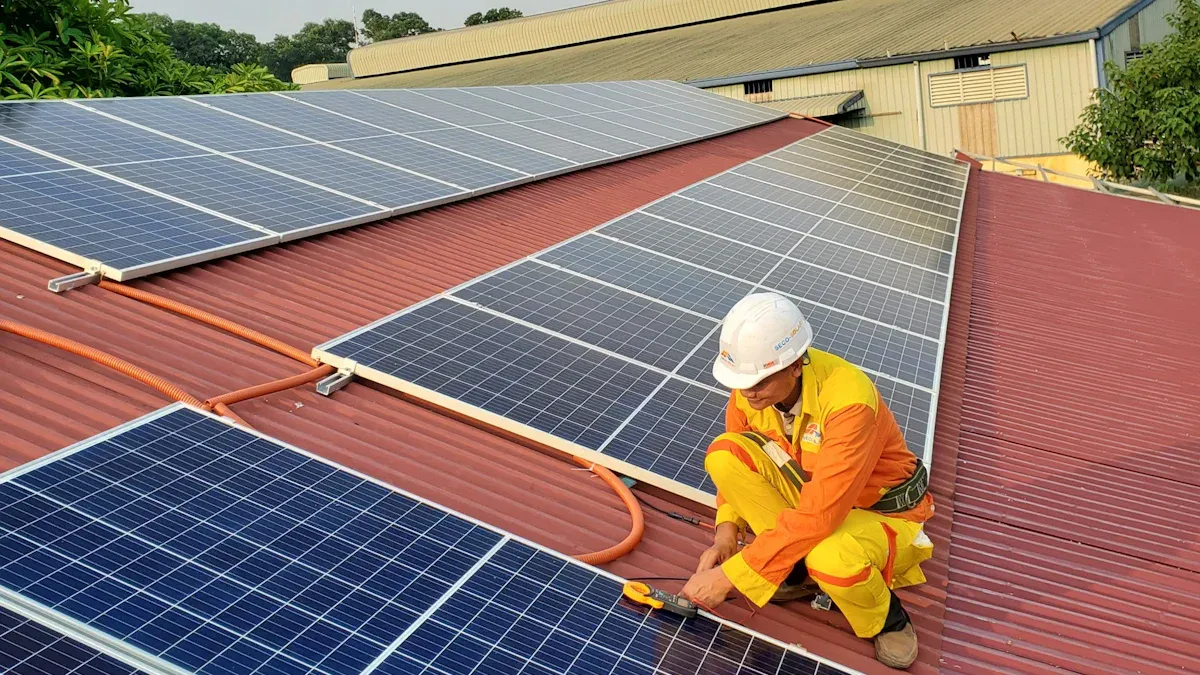
You have a big choice to make in 2025. Ground mount solar is good for big properties and businesses. Roof-mounted systems are better for homes with little space. Ground mount solar is popular for large utility projects. It lets you get more sunlight and add more panels easily. Think about things like cost, space, energy, and how easy it is to fix. Roof-mounted panels cost less at first and use your roof. Ground-mounted systems stay cooler and work better for a long time. Look at your property, money, and energy needs before you choose.
Ground mount solar panels get more sunlight. You can change their angle and direction. This helps make more energy.
Roof mount solar panels save space. They also cost less to put in. These are good for homes with small yards.
It is easier to take care of ground mount systems. You can clean and check them from the ground. You do not need to climb or use special tools.
Think about how big your property is before you choose. Ground mounts need more land. Roof mounts use the space on your roof.
Think about how much energy you will need later. Ground mounts can be made bigger in the future. Roof mounts depend on your roof’s size and shape.
Look at local rules and permits. Ground mounts often need more paperwork than roof mounts.
Think about how much money you have. Ground mounts cost more at first. But they may make more energy over time.
Check if your roof is in good shape. If your roof is old or broken, ground mounts might be better for solar panels.
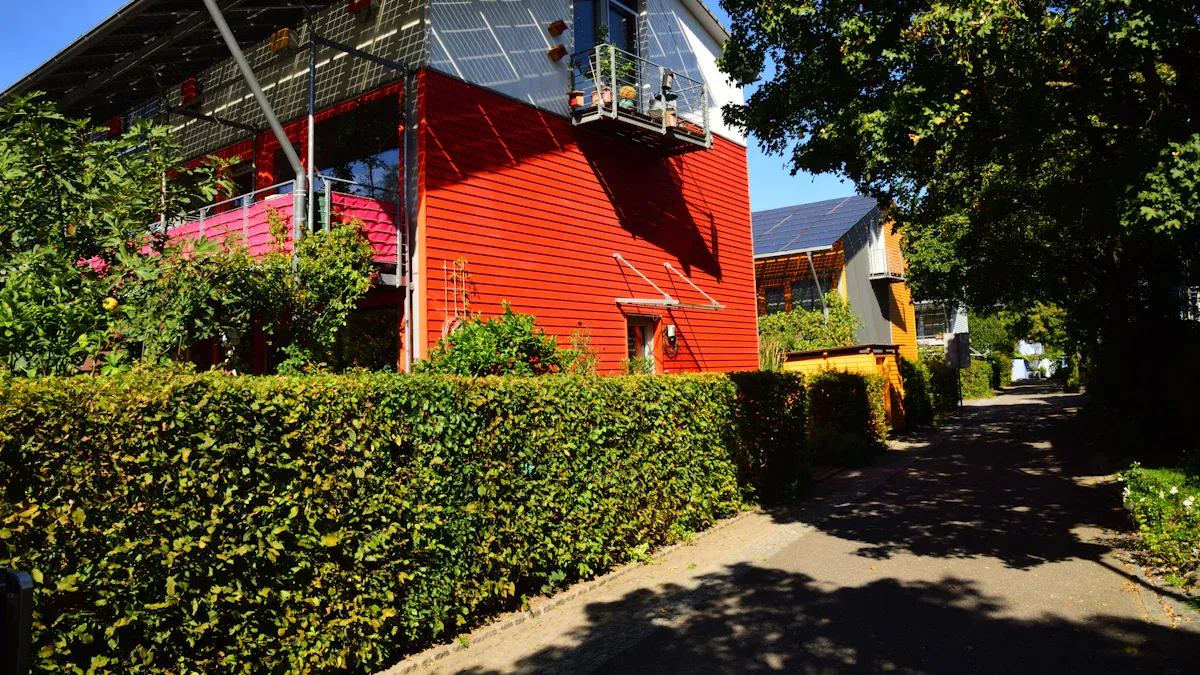
Picking between ground mount solar and roof mount solar panels can be tough. You want to find the best choice for your needs. Here is a simple table that shows the main things to compare:
Cost Factor | Ground-Mounted | Roof-Mounted |
|---|---|---|
Equipment & Panels | £4,500+ | £4,000+ |
Labour & Installation | £1,500–£3,000 | £1,000–£1,800 |
Energy Efficiency | Often higher due to optimal tilt and orientation | Dependent on roof pitch and orientation |
Higher due to additional mounting & groundwork | Generally lower, uses existing roof structure | |
Maintenance & Cleaning | Easier access for maintenance | Harder to reach; may need specialist cleaning |
Tip: Ground-mounted systems let you put solar panels anywhere on your land. Roof-mounted systems use your roof, so you save space.
If you pick ground mount solar panels, you get many good things:
You can choose the way your panels face and their angle. This helps you catch more sunlight.
You can set panels to face south and tilt them between 30° and 40°. This gives you better efficiency.
You can clean and fix your panels easily. You do not need special tools to reach them.
Your roof does not get extra weight or damage from the panels.
You can make your system bigger or smaller. This is good for homes or businesses with extra land.
You can build your system to fit any land size or shape.
Note: Ground-mounted solar panels often work better because you can move them to get more sun. You do not need to worry about your roof’s angle or direction.
Roof mount solar panels have their own good points:
You save space on the ground. This helps if you live in a city or have a small yard.
You pay less to install them because you use your roof.
You can get good prices and save up to 20% when you compare quotes.
You can save more money over time, especially if you pay cash and upgrade your electrical panel.
Your property looks tidy because panels sit on your roof and do not take up land.
Tip: Roof mounted solar panels are great for homes with little space. They help you use your roof for energy and keep your yard the same.
When you look at the good and bad sides, ground mount solar panels give you more control and are easier to clean. Roof mount solar panels cost less and save space. You should think about your land size, money, and future plans before you choose.
You can install ground mount solar panels on open land near your home or business. These systems use metal racks and sturdy posts set into concrete. You choose where to place them, which helps you get the best sun exposure. The process for installation follows clear steps:
Map and plan your site.
Dig footings for the posts.
Set the posts in place.
Let the concrete cure.
Add cross pipes and top caps.
Install rails for the panels.
Set up electrical components.
Lay the solar panels on the racks.
Connect the electrical wiring.
Commission the system to start producing energy.
You can pick between pole-mounted solar systems or concrete foundation racking systems. Both options give you flexibility in design and placement.
A ground mount solar system stands apart from roof mount solar panels. You install the panels on metal racks with vertical poles in concrete. This design lets you space the panels for maximum energy production. You can clean and inspect the panels easily because they sit at ground level.
Feature | Ground Mount Solar Panels | Roof Mount Solar Panels |
|---|---|---|
Energy Production | More flexible spacing and orientation for larger systems. | Can be productive if roof has good solar access. |
System Design | Installed on metal racking with vertical poles in concrete. | Mounted directly on the roof structure. |
Accessibility | Easier to clean and inspect. | Harder to access, often requires professionals for maintenance. |
You can adjust ground mount solar panels to face the sun directly. This helps you get the most energy from your system. You do not depend on your roof’s angle or direction. You can tilt the panels to catch more sunlight throughout the year. This is one of the biggest benefits of ground mount solar.
Ground mount solar panels stay cooler than roof-mounted systems. Air flows freely around the panels. Cooler panels work better and last longer. You get more power and better efficiency.
You can reach ground mount solar panels without climbing. Cleaning and repairs become simple tasks. You save time and avoid hiring specialists. This is a major advantage for long-term upkeep.
You pay more for ground mount solar installation. You need extra materials, labor, and groundwork. Concrete and metal racks add to the price. This is one of the main ground mount cons.
You need enough open land for ground mount solar panels. Small yards or crowded properties may not work. This limits your options and is a clear disadvantage.
You may face more rules and paperwork for ground mount solar. Local authorities often require permits for new structures. This can slow down your project and add costs. Permitting is one of the ground mount disadvantages.
You should weigh the advantages and disadvantages before you choose. Ground mount pros include better sun exposure and easy maintenance. Ground mount cons include higher costs and land needs. If you want top performance and have enough space, ground mount solar could be the right choice for you.
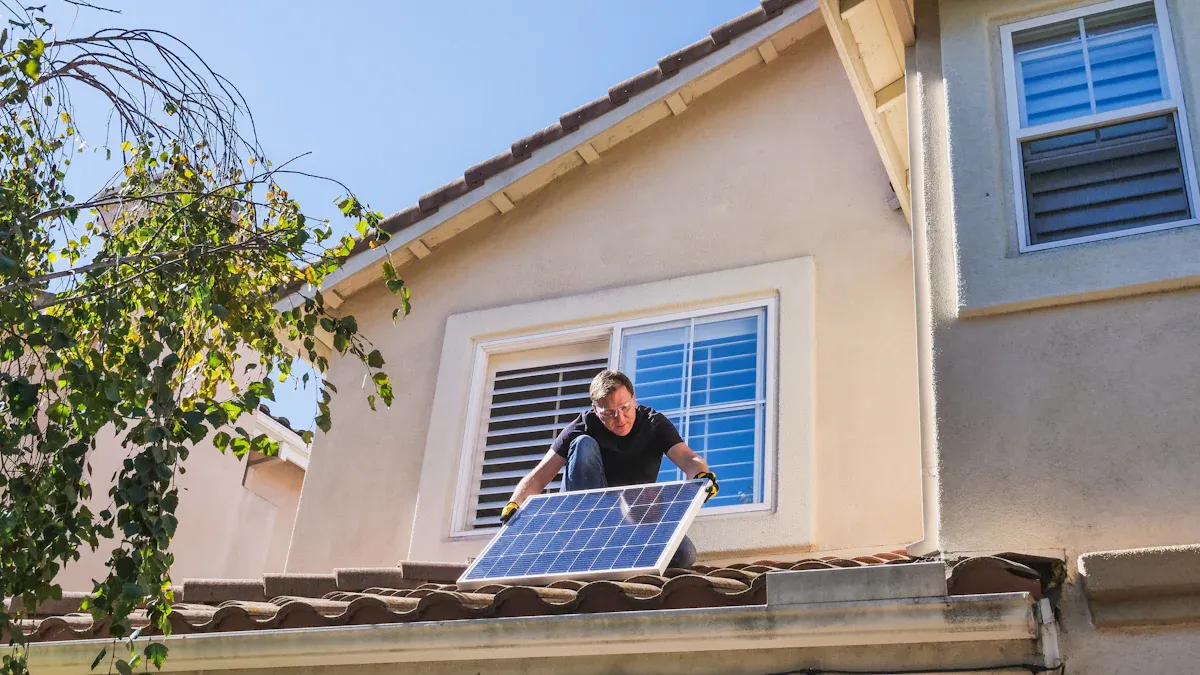
You put roof mount solar panels right on your roof. There are clear steps to follow. First, you get all permits and approvals. Next, you find and mark the rafters for strong support. Then, you drill small holes and use bolts to attach mounts. You seal the mounts so water does not leak in. After that, you add rails to make a strong frame. You lift the solar panels and attach them. You check if the panels are straight and spaced right.
Solar panels have special cells that turn sunlight into electricity. When sunlight hits the cells, they make direct current (DC). An inverter changes DC into alternating current (AC). AC powers your home. Some systems use solar shingles or tiles that look like your roof. Asphalt shingles work well and cost less. They give a good base for the panels.
The solar roof shingles in an integrated roof system have cells made from special materials. These cells soak up sunlight and move energy to electrons. This makes electrical charges. The charges react to an electric field and make electric current.
Roof mount solar panels save space on the ground. You use your roof, so you do not need extra land. This is good for homes in cities or with small yards.
Roof mount solar panels cost less to put in. You use your roof, so you need less work and fewer materials. You do not need concrete or extra racks.
Roof mount solar panels need fewer permits. Local rules for roof panels are easier than ground mounts. You finish paperwork faster and start sooner.
Tip: Roof mount solar panels save space and cost less at first. You also get a quicker permit process.
Your roof must be big enough and in good shape. If your roof is small or has shade, you may not fit enough panels. Old or broken roofs may need fixing before you add panels.
It is hard to clean or fix roof mount solar panels. You need ladders or safety gear to reach them. Sometimes you must pay experts to help.
Solar panels make your roof heavier. Over time, this can hurt the roof’s structure. You may need to check for leaks or damage after you install panels.
You should think about the good and bad sides before you choose. Roof mount cons are less space and harder cleaning. Roof mount solar panels work best for homes with easy roof access and strong roofs.
When you look at installation cost, ground mount solar usually costs more than roof mount solar panel systems. In 2025, you might pay 20-30% more for ground mount solar because you need extra labor, land preparation, and materials. For example, a roof-mounted system can cost between $10,000 and $25,000. A similar ground mount solar system may cost $15,000 to $30,000 or more. You pay more upfront, but you get flexibility in placement and design.
You should think about long-term value, not just the initial price. Here are some points to consider:
Ground mount solar systems often produce more energy because you can place them for the best sun exposure.
Roof mount solar panel systems cost less to install, but they may not catch as much sunlight if your roof faces the wrong way.
Over time, ground mount solar can give you higher energy output, which means better solar energy production and savings.
Roof mount systems save you money at first, but you might get less energy if your roof has shade or a poor angle.
Ground mount solar needs more space than roof mount systems. You must have enough land for the foundation and racks. Most ground mount solar panel systems need at least 0.25 to 0.5 acres of open space. Roof mount systems use your roof, so you do not need extra land. This is one of the main advantages and disadvantages to think about.
Space needs change depending on where you live. Here is a table that shows the differences:
Environment | Space Availability | Challenges |
|---|---|---|
Urban | Limited roof space due to smaller properties | Shading, roof orientation issues, planning restrictions |
Rural | More roof space available | Fewer zoning restrictions, but may face grid limitations or rugged landscapes |
If you live in a city, you may have a small roof and less space for solar panel systems. Rural properties often have more land, so you can install larger ground mount solar systems. Urban areas face more rules and shading problems, while rural areas may have grid limits.
Ground mount solar panels let you choose the best spot for sun exposure. You can set the angle and direction to get the most energy production. Roof mount solar panel systems depend on your roof’s position. If your roof faces the wrong way or has shade, you get less energy output. Ground mount solar gives you more control and better performance.
Temperature affects how well your solar panels work. On hot days, panels can get very warm, which lowers their efficiency. A crystalline silicon solar panel loses 0.3% to 0.5% efficiency for every 1°C above 25°C. If the panel gets up to 60°C, you can lose 10-15% of your power. Ground mount solar systems usually run 5-10°C cooler than roof-mounted panels because air moves around them. Cooler panels work better and last longer.
Tip: If you want the best energy production and have enough space, ground mount solar offers strong advantages. Roof mount solar panel systems work well for smaller properties and lower installation costs, but you may see some disadvantages in energy output and maintenance.
You want your solar panels to last a long time. It is easier to care for them if you can reach them easily. Ground mount solar panels are simple to clean and fix. You just walk up and use a soft brush to wipe off dirt. You do not need to climb or wear special gear. This makes taking care of them fast and safe.
Roof mount solar panels are harder to reach. You must use a ladder or walk on the roof. Sometimes you need safety gear or help from experts. Cleaning and fixing them takes longer and may cost more. If your roof is steep or high, it is even harder. Think about these things when you look at costs and care.
Tip: If you want to do maintenance yourself, ground mount solar panels are the easiest choice.
Ground mount solar panels:
Easy to clean and fix
No climbing or safety gear needed
Simple upkeep
Roof mount solar panels:
Harder to reach
May need ladders, safety gear, or experts
Maintenance can cost more
Solar panels are made to last many years. Most systems work for 20 to 25 years. You can help them last longer by keeping them clean. Ground mount solar panels stay in better shape because you can check them often. You find problems early and fix them fast.
Ground mount solar panels sit on solid ground. This helps protect them from wind and rain. Roof mount solar panels get more stress from weather and roof movement. You may need to check for leaks or damage after storms. Both types can give you good energy if you care for them.
Ground mount solar panels:
Easier to keep in good shape
Stable base protects from wear
Lasts 20 to 25 years
Roof mount solar panels:
Harder to check and fix
More problems from roof issues
Lasts 20 to 25 years
Pick the system that fits your needs and property. If you want easy care and strong energy, ground mount solar panels may be best. Roof mount solar panels are good if you want to save space and spend less at first. Both can give you reliable energy for many years.
If you live in a city or suburb, your property may have limited space. You want to make the most of what you have. Roof mount solar panel systems often work best for small lots. They use your roof, so you do not need extra land. This choice helps you save your yard for other uses.
You should also look at your roof’s size and shape. Some roofs have areas that cannot hold panels because of vents, chimneys, or shading. High-power solar modules, such as those using TOPCon, HJT, or IBC technology, can help you get more energy from a small area. These panels range from 410W to 800W, so you can pick the right size for your roof.
Here is a table to help you compare your options:
Factor | Ground Mount | Roof Mount |
|---|---|---|
Available Space | Needs more land | Good for limited land, uses roof |
Sun Exposure | Best if roof is shaded | Check for shading and orientation |
Budget | May give better efficiency long-term | Lower initial costs |
Aesthetic Preferences | Flexible placement | Discreet, blends with roof |
Maintenance | Easier to clean and inspect | Rain helps keep panels clean |
Local Regulations | Check building codes | May have specific requirements |
Tip: If your yard is small, a roof-mounted system is usually the best fit. You can still get strong solar energy production by choosing high-efficiency panels.
Your roof’s condition matters when you choose a solar system. If your roof is old or damaged, you may need repairs before installation. A strong, well-maintained roof supports panels safely. If your roof cannot hold panels, ground mount solar becomes a better choice. This option lets you place panels anywhere on your property with good sunlight.
You should also think about how easy it is to reach your panels. Roof-mounted systems stay cleaner because rain washes them, but they are harder to inspect. Ground-mounted panels are easy to clean and check for problems.
Note: Always check your roof’s age and strength before you install solar panels. This step helps you avoid extra cost and trouble later.
If you own a rural property, you likely have more open land. This gives you more choices for solar panel placement. Ground mount solar works well when you have clear, dry, and flat land. You can set up a larger system and place it for the best sun exposure. This setup can lower construction costs and make installation easier.
You should pick a spot with little shade and good access to the sun. Soil quality also matters. The ground must support the weight of the panels and racks. You may need to check local zoning laws and building codes before you start. These steps help you avoid legal issues and delays.
Rural properties often sit far from the main power grid. You may want to use solar panels to go off-grid. Ground mount solar gives you the freedom to build a bigger system. You can add batteries to store energy for cloudy days or nighttime use. This setup helps you become more self-sufficient.
You should also think about how close your system is to existing power lines. If you want to connect to the grid, a nearby connection point makes the process easier and less costly.
Tip: Rural land gives you more freedom to design your solar system. You can choose the size, location, and features that fit your needs.
If you run a small business, your building’s roof can be a great place for solar panels. You need to check if your roof is strong enough to hold the panels. A good roof supports the extra weight and keeps your system safe. You should also look at the roof’s orientation and tilt. Panels work best when they face the sun for most of the day.
You may need to upgrade your electrical system before installation. This step helps your business use the energy you produce. You should also think about your business’s energy use patterns. A solar system works best when it matches your daily needs.
Note: Always check your roof’s structure and plan for future changes to your building. This helps your solar system last longer and work better.
Some businesses have extra land around their buildings. If you have open space, ground mount solar can be a smart choice. You can build a larger system and place it for the best sunlight. This setup makes maintenance easier and lets you expand your system in the future.
You should also check local rules and climate conditions. Some areas have strict regulations for ground-mounted systems. Sunlight exposure and weather can affect how well your panels work.
Tip: Think about your available space, roof condition, and local rules before you choose a solar system for your business. The right choice helps you save money and get the most from your investment.
You want to make the best choice for your solar panel system. Haina Solar helps you look at your property, your budget, and your energy needs. You can use these expert tips to decide which solar mount fits your situation.
Haina Solar recommends that you start by looking at your space. If you have a large yard or open land, ground mount solar panels give you more options. You can place them where the sun shines the most. If your space is limited, roof mount solar panels use your roof and save your yard for other things.
Here are some important points to consider as a homeowner:
Space Availability: Ground mounts work best for big properties. Roof mounts suit homes with small lots or limited outdoor space.
Budget: Roof-mounted systems usually have a lower cost because they use your roof for support. Ground mounts need more materials and labor, so you pay more at first.
Energy Needs: Ground mounts let you add more panels if you need more power later. You control the size and placement for better energy production.
Aesthetic Preferences: Roof-mounted panels blend in with your home. Ground mounts may stand out more in your yard.
If you own a small business, you have different needs. Haina Solar suggests you follow these steps:
Determine Your Installation Type. Look at your property and decide if a roof-mounted, ground-mounted, or pole-mounted system fits best.
Evaluate Your Local Climate. Pick a solar mount that can handle your area’s weather, like strong winds or heavy snow.
Consider Your Budget. Think about both the upfront cost and the savings you get over time.
You should talk to a solar expert before you start your installation. Haina Solar can help you plan your system, check your property, and choose the right solar mount. You get advice that matches your goals and your budget.
You can trust Haina Solar to guide you through every step. You learn about your options, compare the benefits, and make a smart choice for your home or business.
When you pick ground mount solar or roof-mounted systems, you should think about some important things. You need to look at your roof type, check for shade, and see how much space you have. You should think about how old your building is and what the weather is like. You also need to decide how big your system will be, what kind of panels you want, and how much money you can spend. Think about your local climate and what new solar technology might come soon.
To make sure you get the most out of your money, you should do a few things. Try to start early so you do not have to wait a long time. Choose a local installer you trust because they give better help. Learn about ways to pay and what tax credits you can get.
If you want a solar system that works for your property, Haina Solar can help you.
Product Type | Description |
|---|---|
Rooftop Solar Mounting Systems | These are made to go on rooftops. |
Ground Solar Mounting Systems | These are for solar panels on the ground. |
Solar Mounting Accessories | These are extra parts for mounting systems. |
You get help from experts and a solar system that fits what you need.
You install ground mount solar panels on open land. You place roof mount solar panels directly on your roof. Ground mounts need more space. Roof mounts save space and cost less to install.
You need enough open space for ground mount solar panels. Small yards may not work well. Roof mount solar panels fit better on properties with limited land.
You can adjust ground mount solar panels for the best sunlight. This helps you get higher energy output. Roof mount solar panels depend on your roof’s angle and direction.
You should clean your solar panels every few months. Ground mount panels are easier to reach. Roof mount panels may need professional cleaning if your roof is steep or high.
You protect your roof by using proper mounting systems. Installers seal all holes to prevent leaks. You should check your roof’s condition before installation.
You need permits for both ground and roof mount solar panels. Ground mounts often require more paperwork. Roof mounts usually have a simpler permit process.
You can add more panels to ground mount systems easily. Roof mount systems depend on your roof’s size and structure. You should plan your system size before installation.
You can expect most solar panels to last 20 to 25 years. You keep them working longer by cleaning and checking them regularly.


